Creation in Revelation – Part 3
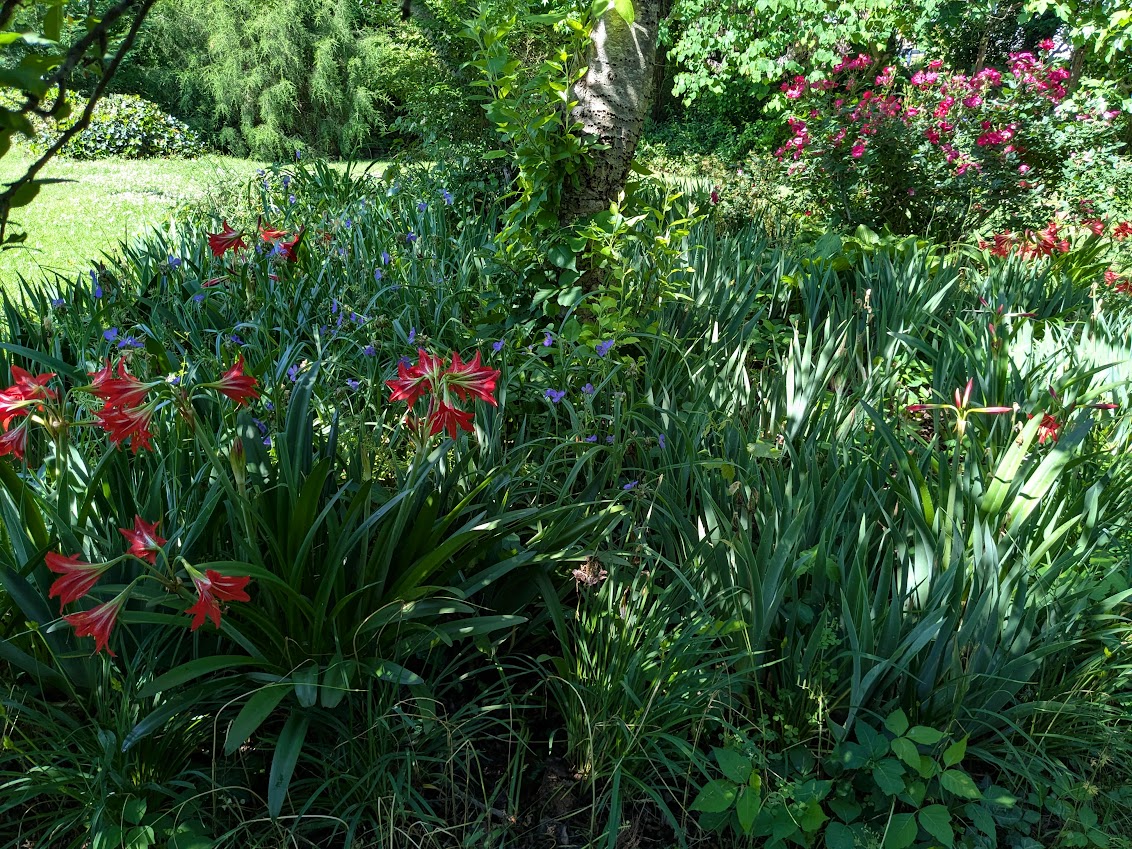
Spring is a reminder of life, and the Garden of Eden. As I watch spring bulbs poking through the ground, daffodils producing yellow flowers and azaleas coming into full bloom, I thank God for the beauty produced in the garden I tend. When the full color of Spring arrives, my thoughts or Bible readings cause me to think of the Garden of Eden. I am sure my garden will never reach the perfection or beauty of God’s original creation.
Possibly the Apostle John had the same thoughts. Israel today does not produce the profusion of flowers I see in Virginia, but it produces palm trees, pomegranates, and many other beautiful plants. John was probably a Levite who served five weeks per year in the Temple. The Levites had a daily reading plan each week. They read Genesis chapter one, covering God’s creation each day, along with a Psalm chosen to go with the Genesis reading. How do I know? The Mishnah tells about the historic readings.
The Prelude to this blog
This is the third blog on Creation in Genesis. Although they do not seem connected, this blog builds upon my other two writings. In the first blog I wrote about the symbolism of the common seven-branched Menorah. The seven branches of this beautiful candelabra symbolize the seven days of Creation as described in the first chapter of the Bible. In the second blog I wrote about the structure of the seven days of creation in Genesis 1. John’s daily readings of the Creation story along with the call to service the Menorah in the holy place during his regular weeks of service found their way into the Apocalypse.
In the process of writing “John’s Apocalypse: a Jewish Idea” I examined the structure of the book of Revelation. In my exploration I discovered that the outline of every major section of the Apocalypse, every list of seven items and every song of seven stanzas comes from the Genesis account of the seven original days of creation as I described in “Creation in Revelation, Part 2.”
I felt amazed. I was excited. I searched my books on Revelation and visited several religious libraries to learn what others had written on this subject. Certainly, other writers knew this prominent theme. I looked in every book on the library shelves and discovered that the structure was almost totally unknown in any of the commentaries, Bible studies, or books about the Apocalypse.
Try this experiment!
The easiest way for me to show the connection between Genesis one and the lists of seven in Revelation is to examine item number four in each list. On the fourth day of the creation story, God created the Sun, Moon, and Stars. These are forms of light. Let us see where light appears in the obvious lists in the Book of Revelation.
In the first list of seven items, which are the seven churches, we arrive at the church of Thyatira. John writes, “These are the words of the Son of God, whose eyes are like blazing fire and whose feet are like burnished bronze.“ At the end of the letter to the church at Thyatira, Jesus says, “I will also give that one the morning star.“
The Lamb of God opens seals on the scroll in the second obvious list. Seal number four contains “a pale horse! Its rider was named Death, and Hades followed close behind him.“ The reader should note that in this seal the lights go out and everything goes from pale to dark. Hades is a place where the sun does not shine.
Two chapters later, in Revelation 8, when an angel sounds the fourth trumpet, “a third of the sun was struck, a third of the moon, and a third of the stars, so that a third of them turned dark. A third of the day was without light, and also a third of the night.“
When the fourth angel empties his bowl “on the sun, and the sun was allowed to scorch people with fire.“
In the fourth couplet of an un-numbered list of laments found in Revelation 18:23 the mighty angel said, “The light of a lamp will never shine in you again.“

Go beyond the experiment
In my blog Creation in Revelation, part 2, I explained the theme of every day of creation. Try out the themes of Day 1, 2, 3, 5, and 6 on every outline, list and poem in the Apocalypse. Research to see if you make the same discovery I did. This is a key to understanding the book of Revelation.
Ok, I am sure you spotted it! I did not ask you to examine the seventh item on each list. The seventh item is special; it is the Shabbat! Follow the pattern I presented, and you will discover each Shabbat. True to Jewish style, there are blessings in celebrating the Sabbath.
The Book of Revelation contains many other outlines, lists, and poems. I go through each of the lists in my book “John’s Apocalypse: A Jewish Idea” to show how themes from the seven days of creation populate every portion of the book of Revelation.
Sometimes commentaries get it wrong!
While studying the book of Revelation, I discovered that some books I trusted most not only missed the guiding design of the seven days of Creation but actually led people the wrong way. This is best seen in their explanations of the seven trumpets and seven bowls of judgment. Many teachers and commentators connect these horrible events to the ten plagues of Egypt. Prooftexting has led many Bible students to go the wrong way. And they should know better, because mathematically seven does not equal ten. God did not fail math!
If the plagues in Revelation 6-9 and 14-16 do not arise from the miracles God poured out on the Egyptians in Exodus, what is the basis for the plagues of Revelation? Presenting the idea fully would make this blog too long. Moses explains what happened in the final chapters of the book of Deuteronomy. I explain the connections in my book “John’s Apocalypse: A Jewish Idea”
If you find this information interesting: 1) please share this blog with your friends; 2) sign up to discover more about the Bible; 3) order a book from my website, KosherCopy.com