Was the Mosaic Covenant ended as obsolete?
Do the scriptures teach God ended the Mosaic Covenant and replaced it with a New Covenant? Theologians in Christianity say that the New Covenant, which Jesus Christ inaugurated, rendered the Mosaic Covenant obsolete for justification. But is that true, or a misunderstanding? Did the fulfillment of the old covenant bring the new covenant into existence? Or do Christians twist what the Bible teaches?
What did Jesus say about the Law of Moses?
Sadly, too many people do not hear the very words Jesus spoke: “Do not think that I have come to abolish the Law or the Prophets; I have not come to abolish them but to fulfill them. For truly I tell you, until heaven and earth disappear, not the smallest letter, not the least stroke of a pen, will by any means disappear from the Law until everything is accomplished. ” (Mt 5:17-20; see Lk. 16:17-17; Jn 5:45-47; Ro. 3:21-31; 8:1-4)
This is especially true of the Mosaic Covenant that Jesus and the writers of the New Testament reiterate several times in shortened form.

Is the Law of Moses the same as the Mosaic Covenant?
A covenant is specifically an agreement made between two parties. The Torah tells about several covenants between God and individuals listed in the scriptures: the covenant with Noah (Ge. 9:11-17), a promise that the whole earth will never again flood, and God gives the sign of the rainbow to show us the agreement is still remembered. Two covenants with Abraham: the second, giving him the land (Ge 15:18), and the first that if Abram faithfully follows God (loves God with all his heart, soul, and strength) that he will be the Father of Many Nations. (Ge 12:1-3) God renewed these two covenants with Abram’s son Isaac and his grandson Jacob. God remembers these covenants 430 years later and frees the Hebrews from the land of Egypt (Ex 2:24; 6:4-5). “Spring: Connecting with God” is a group study to help Christians live according to these covenants personally. The covenants mentioned are agreements between God, specific people, and their descendants.
How are the Covenant and Law distinct?
While related, the Mosaic Covenant and the Law of Moses are two completely distinct documents. The Mosaic Covenant is an agreement made with the whole of the Hebrew people (not just Moses), their genetic descendants, and also their faith adherents for all time. This Covenant is not a piece of legislation or a legal code, but an agreement that all people and parties must accept. The Covenant God gave to Moses on Mount Sinai contains the core, or directing heart of the 613 laws and commands of the Torah, but it is not the law. The covenant Moses received on Mt. Sinai is not so much a legal code as it is a philosophy of life or a morality that flows into laws. It is an abiding principle, not a specific rule.
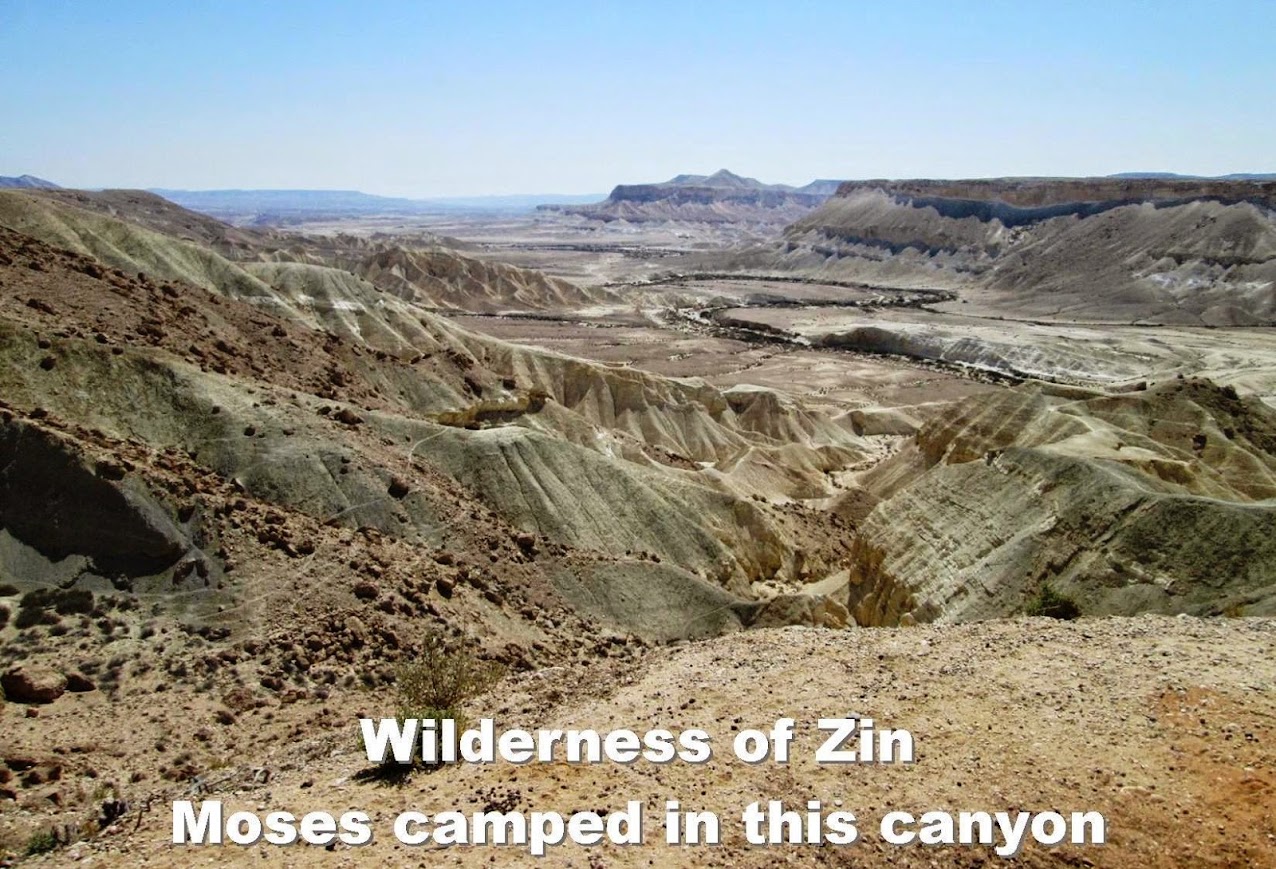
God designed the Mosaic Covenant as a short, memorable statement to show the Hebrew people how to live. It was personally written by God on stone and given to Moses on Mt. Sinai (Ex 24:12).The Bible tells us Moses broke the tables of the covenant, so God called him up to Mt. Sinai a second time, and made him write the words on replacement stones (Ex. 34:27-28).
Who gave the Mosaic Covenant?
God, as the originator of the Covenant (a specialized form of contract) feels that it is necessary to have all parties in every generation acknowledge their acceptance of the contract. Moses recited the Covenant at its inception. (Ex 24:7) The Priests recited the Covenant on Mt Gerezim (Dt 11 & 27) as the Hebrew people entered the land now called Israel. (Joshua 8:34-35) Solomon renewed the Covenant when he dedicated the Temple, and King Solomon read the Covenant at a time of renewal. (2 Kings 23:1-3), and by Ezra as the Jews reentered the land (Ne 8:1-6).
What does Mosaic Covenant really require?
Through the Mosaic Covenant the people of Israel make two agreements:
- 1) Love God with all their hearts (Dt 6:4-5); and
- 2) Love their Neighbors (Lev. 19:18; Ro. 13:9).
God agrees to do these two things when the people of Israel honor the Covenant:
- 1) God would love the people (Lev. 26:3-13); and God says,
- 2) “if you obey me fully and keep my covenant, then out of all nations you will be my treasured possession. Although the whole earth is mine, you will be for me a kingdom of priests and a holy nation.’” (Ex. 19:5-6)
The Apostle Peter tells Gentiles who have received faith in Jesus they can participate in the blessings God gives through this Covenant. (1 Peter 2:9)
Did the Cross fulfill the requirements of the Mosaic Covenant?
No! Look at the section just above. The Mosaic Covenant told us to 1) Love God; and 2) Love our Neighbor as ourselves. Jesus told us to do the same two things: “‘Love the Lord your God with all your heart and with all your soul and with all your mind. This is the first and greatest commandment. And the second is like it: ‘Love your neighbor as yourself.’ All the Law and the Prophets hang on these two commandments.” (Mt 22:37-40)
The Cross fulfilled the requirement for the sin offering for an individual and the atonement offering for the community as found in the book of Leviticus. The animal sacrifices for sin and atonement offerings bring recognition of the harm done to life by an individual and by the community as a whole through our actions, intentional and unintentional. The sacrifice by Jesus the Messiah on the cross was an ultimate picture of the harm done to others for all time. The cross represents the replacement of animal offerings that humanity had given since the second generation in Genesis 4, rather than the Mosaic Covenant. Jesus said, “Son of Man did not come to be served, but to serve, and to give His life as a ransom for many.” (Mt 20:28)
How sure and stable is the Mosaic Covenant? Baalam, an enemy of God knows, and reports, “God is not human, that he should lie, not a human being, that he should change his mind. Does he speak and then not act? Does he promise and not fulfill? I have received a command to bless; he has blessed, and I cannot change it.” (Nu. 23:19-20) Psalm 19:7 confirms this by saying, “The law of the LORD is perfect, converting the soul: the testimony of the LORD is sure, making wise the simple.”
Then what is the New Covenant?
Some people believe the Mosaic Covenant ended and that a New Covenant replaced it, but the Bible does not say this. A simple reading of scriptures that name the New Covenant will reveal that this agreement is a renewal, strengthening, and internalizing of the Mosaic Covenant.
The New Covenant first appears in Jeremiah 31:31-34: “The days are coming, declares the Lord, when I will make a new covenant with the people of Israel and with the people of Judah. It will not be like the covenant I made with their ancestors when I took them by the hand to lead them out of Egypt, because they broke my covenant, though I was a husband to them, declares the Lord. This is the covenant I will make with the people of Israel after that time, declares the Lord. I will put my law in their minds and write it on their hearts. I will be their God, and they will be my people. No longer will they teach their neighbor, or say to one another, ‘Know the Lord,’ because they will all know me, from the least of them to the greatest, declares the Lord. For I will forgive their wickedness and will remember their sins no more.”
Ezekiel, a contemporary of Jeremiah’s tells the people during their captivity in Babylon, “I will give you a new heart and put a new spirit in you; I will remove from you your heart of stone and give you a heart of flesh. And I will put my Spirit in you and move you to follow my decrees and be careful to keep my laws. Then you will live in the land I gave your ancestors; you will be my people, and I will be your God. I will save you from all your uncleanness.” (Ezekiel 36:26-29)
What do the New Testament Writers say about the Mosaic Covenant?
During the Last Supper, as part of the after dinner blessing at the Passover, Jesus spoke the words so often repeated in Churches as part of the Eucharist or Communion service, “This is my blood of the new covenant, which is poured out for many.” (Mt 26:28; Mk 14:24; Lk 22:20; 1 Cor 11:25) In speaking these words, Jesus affirms his purpose is to be the “Lamb of God who takes away the sin of the world,” (Jn 1:29) not to do away with the two greatest commandments that form the Mosaic Covenant.

The book of Hebrews has a lengthy passage about the sacrifices and New Covenant and how they relate to Israel and the sacrificial atonement of Jesus. Chapter 10 of this book quotes Jeremiah and as a preface states, “if there had been nothing wrong with that first covenant, no place would have been sought for another. But God found fault with the people…” (Heb 10:8) Notice, the text says there was a problem with the people, not the word of God. This is like the saying of Isaiah and quoted in the New Testament, “The grass withers and the flowers fall, but the word of our God endures forever.” (Is 40:8; Mt 24:35; Lk 16:17; He 4:12; 1 Pe 1:24-25) The Mosaic Covenant was not obsolete; the people were disobedient.
From this, you see God has not abolished the Law, but the Love for God and Neighbor has grown so strong that people internalize it. (This is what Christians should be like!) The New Covenant is about internalizing the Mosaic Covenant, not evicting or changing the concept. Jesus taught, “You have heard that it was said to the people long ago, ‘You shall not murder, and anyone who murders will be subject to judgment.’ But I tell you that anyone who is angry with a brother or sister will be subject to judgment. Again, anyone who says to a brother or sister, ‘Raca,’ is answerable to the court. And anyone who says, ‘You fool!’ will be in danger of the fire of hell.” (Mt 5) The standard Jesus sets is higher than that of the law.
How did 70 AD change Judiasm and Christianity?
What has been replaced? The altar, the priesthood and the Temple have been replaced. That happened in 70 AD! The Temple, Altar of sacrifice and Jewish Priesthood no longer exist. The book of Revelation teaches they will never exist again. (Rev. 21:22) No Sacrifices, no atonement through sheep and goats, no shedding of blood. … Jesus is the New Covenant that continues the Old agreement because He shed His blood for us. There is no offering in a Temple, no absolution by a Priest … Our faith is within us. We Love God and our neighbor, and God loves us so much we do not have to go to the Temple in Jerusalem or the Church to have our sins removed. Matthew 26:28; Luke 22:20.