1 Easter Drama with a successful socially distanced choice
It is all too evident right now that we are in the midst of the Covid Pandemic. While there are hopes that this infectious disease will abate, plans for this Easter season are not looking good.

An Easter Drama designed for Safety
It is a tradition of many churches to hold an Easter Cantata and drama to help people personalize one the holiest seasons on the Christian calendar. But too many churches are giving up and saying it is not possible, without either creating an idea or looking for outside help.
For the second group, I have a suggestion. It is an Easter Drama with built in Pandemic safety features called The Case of the Missing Body. The play is not traditional, rather it is segmented by scene and designed to be performed in separate spaces. Portions of this play are designed to be outdoors, where people are proven to be safer from the disease.
The Outline of the Play
1. The play begins in the Jerusalem Market. Normally this is a busy area with craftsmen (carpenters, basketweavers, breadmakers, musicians) all showing how to produce their wares. This year, to eliminate crowds, the area should be set up, but not staffed.
2. Along with the market is a census taker. This person sets up a line for people to go through the drama. In the case of COVID, it is a list by family group. Each group gives a cell phone number, and a call is made when it is their turn for a socially distanced performance.
Normally guides lead people through the performance. This year, a guild should be available to recite the first lines (or play them on a tape recorder, and point the people in the correct direction for the drama.
The good thing about this drama is that every scene is separated with its own room or location, and therefore socially distanced. Teams of actors are small, and can be family groups or close friends. There are lines in this book, but I would recommend as each group of the audience approaches the scene, lines of the actors be recorded on a CD, and played from an audio device. No lines spoken, and no germs spread. Audience and actors will be separated by more than six feet.
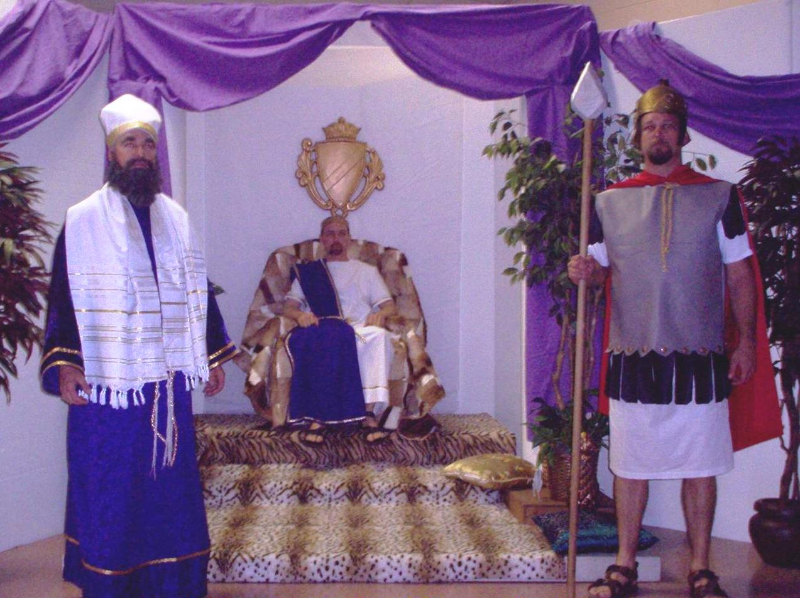
3. The first scene we placed in our church fellowship hall. It is called Pilate’s Throne Room. There is a large throne, to one side a Priest, and on the other side (each six feet away) a soldier. Pontius Pilate is upset, because he has just discovered the body of Jesus is missing from the tomb.
4. The audience proceeds to an Upper Room, which can be a large classroom representing the home of Mary the mother of John Mark, where several women (all named Mary) have taken refuge. They are preparing spices to anoint the body of Jesus after the Sabbath.
5. The women direct the audience to the next classroom, which contains several Disciples in Hiding. The missing body comes as a surprise to both the Women (in room 4) and the disciples in hiding. The audience is directed to go to the city gate, where perhaps something is known.
6. The audience proceeds to the city Gate. This is a doorway leading outside, where several women are dancing, and the words of Psalm 118 are being played. We often let several Youth lead this scene.
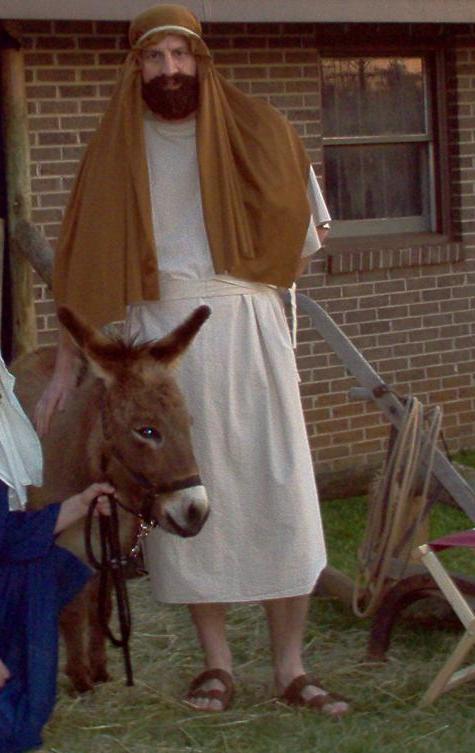
7. Beyond the gate is a Donkey Farmer. He doesn’t understand how the cross got put on his animal’s back. The traditional folk-story is in the book, and will be shared by the Farmer..
8. The Site of the cross is an outside location where two Centurion are discussing how this Crucifixion has changed them.
9. The audience proceeds next to the home of Nicodemus. This can be a doorway set up outside, or a room with an outside entrance. Nicodemus shares some prophecies, and directs the audience to the tomb where he and Joseph of Aramathea laid the body of Jesus.
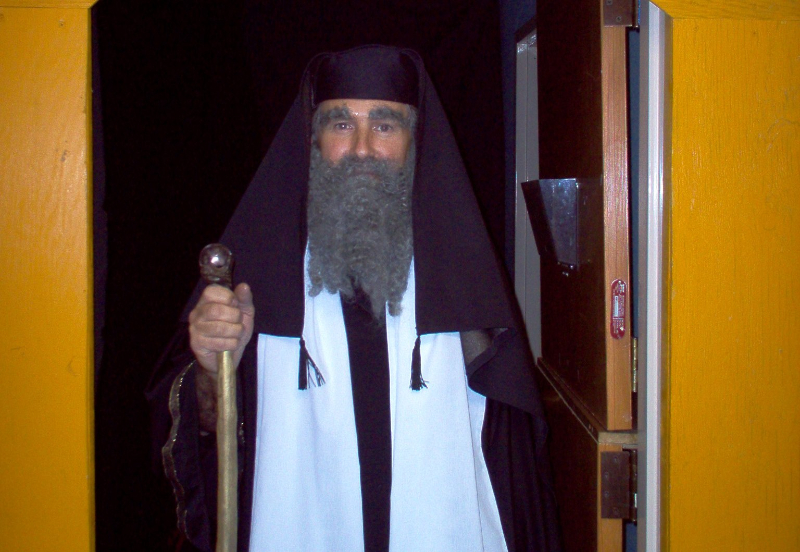
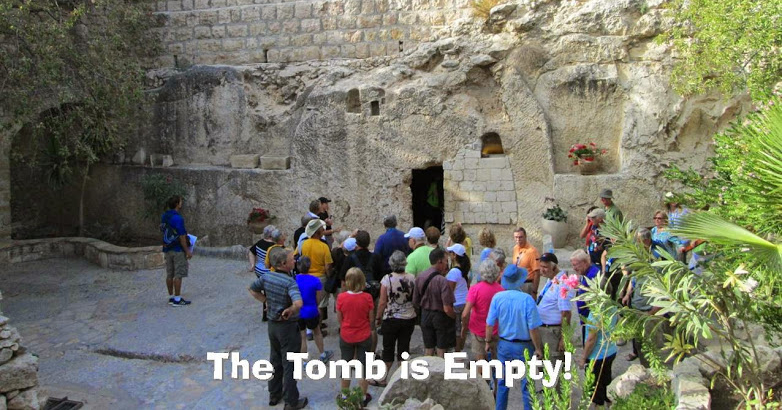
10. The audience proceeds to the Tomb where they are greeted by Angels. The messengers of God tell the group, “He is not here, He has risen.” The group can enter the tomb and look.
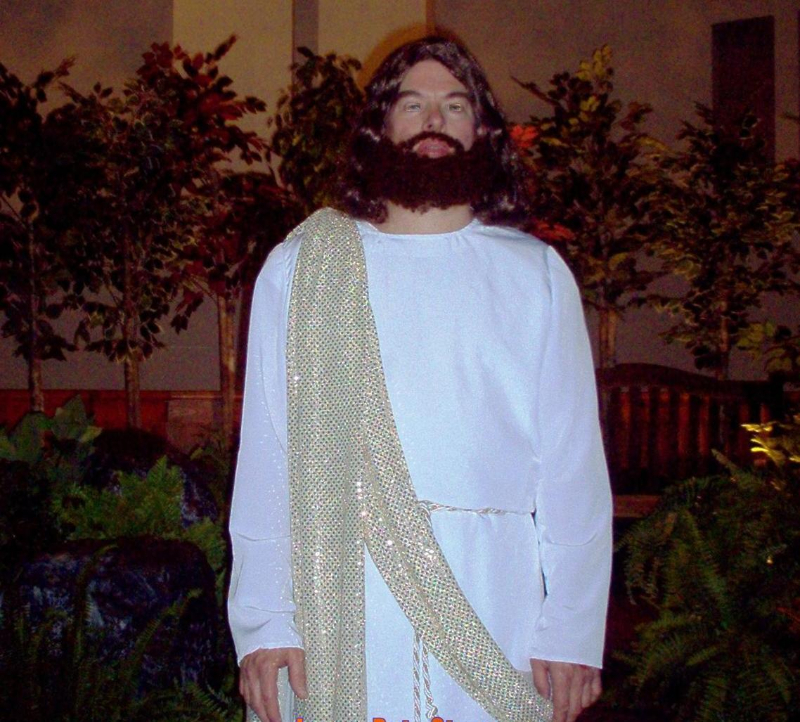
11. As the group walks away, they meet the Living Lord ( John 20:15, 19-22) in a garden, and receive the end of the story.
12. Beyond the garden, we set up a prayer area for anyone who wants to linger and digest the message of the drama.
The Benefit of this Drama
The benefit of this play, over other forms of drama is that families with children will become part of the first century Easter Drama. Children will be able to see actors up closely, like they see other people in life. If actors know the story well enough, they can eve insert lines or interact with the audience during the play.
They must not, however, be long winded enough to delay the play (or audience groups will bunch up) or diverge from their first century character.
I would recommend that the director of the play walk around, behind the scenes, dressed as a 21st century adult, to help guide the crowd, answer questions, and prevent people bunching up.
The play is designed with the first scene being the longest so people groups do not run into each other, and each group gets a personal, real life experience.
The book is available in Kindle format on Amazon.com. As an author, I available to assist you in the production of this play and answer questions. People can contact me by e-mail available on the contact page of my website.