Jerusalem: Incessantly Dynamic, Invariably Volatile, Eternal City
Our world is changing. Take time to think, what has changed in the last Month? Year? Two years ago? Two weeks ago the Jerusalem District Court ruled at least six families must vacate their homes in east Jerusalem. Less than a month ago (April 23-24) missiles were fired from Gaza to Israel. Ten days before that speakers to the minarets at Al-Aqsa Mosque were silenced by Israeli police so Israel’s president could give a speech on Yom HaZikaron, the day of Remembrance. It was also Ramadan. Today a war rages in the Holy Land.
Is there hope? Who is responsible? Can there ever be peace? What is the source of conflict? It seems that these conflicts break out about every seven years … but certainly not a Sabbatical Year occurrence!
The problem is that nothing is as simple as we want to make it, and a lot of ideas have been published that seem true, if all we believe is the press … or if we only look at our current time, but the conflict is older than our time, and almost not as old as Biblical days.
Ancient Israel in the Bible
The first problem is that everyone wants to connect the conflict in Israel to conflicts, probpecies, morals, events, or stories found in the Bible. We could go back to an occurrence that happened near Nablus on the West Bank to set the start of the conflict. We could go back to Genesis 34, where Shechem rapes Jacob’s daughter Dinah. But very few people even know of this story, so unless this is like the Hatfields and McCoys and people are fighting without even knowing why, that is not the case. The fact is, the Palestinians and Israelis both know why the fighting is occurring. So the cause of the conflict can not be found in these Biblical stories.
Vacating and Occupying Israel
Both sides of the issue claim that their ancestors have lived in the land for multiple generations. They identify ancestors that go back to Abraham or before. And while there is some truth here, it is but minima. Most of the people in Israel are much more recent transplants. They do not have a history in the land. History records multiple displacements of people, and evidence shows how transplants occupied, were sent, or immigrated to eretz Yisrael across the years.
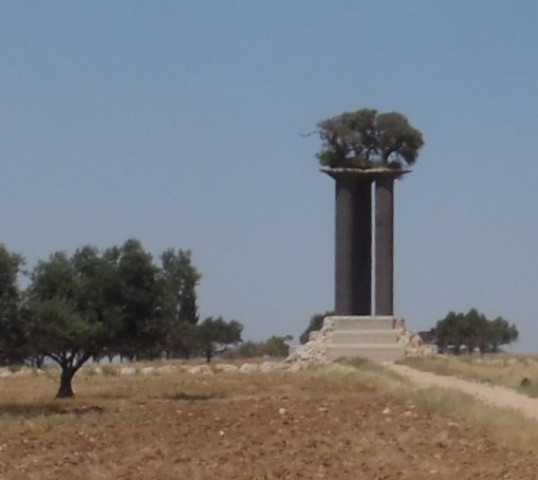
In the days of Isaiah, the Bible tells us Assyria entered Palestinian lands, and deported the residents. Evidence shows that transplants were sent from across the Near East to replace Palestine’s original residents. An ongoing Archaeological dig at Tel Hadid is attempting to understand these facts.
The land was emptied again in the days of Nebuchadnezzar. People from Edom moved into western Judea. The land was vacated again in the days of the Roman Empire. Many people died at the hands of the crusaders. And the population changed again under Ottoman rule. The land of Israel is ever changing, driven by outside sources. The population is anything but static, it is always changing.
The Ancient City of Jerusalem
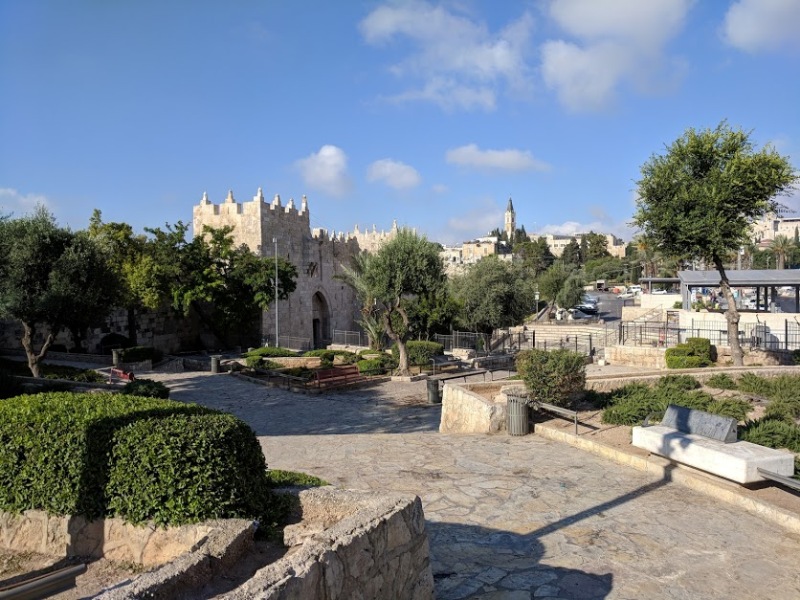
Perhaps you have been to Jerusalem. Certainly you have seen this city through tourist photos or in the news. We think of bustling metro Jerusalem as the eternal city, but current events have fooled most of us. The city, like the rest of Israel, is ever changing.
To get a better look at this, we can look at diaries. Israel has always had visitors, who wrote about their experiences. These visitors included a Jewish man named Moses Montifiore from England in the nineteenth century. In 1827, he wrote in his diary:
Wednesday, October 17th.—They left Ramlah at 7 a.m., and entered the gate of David at Jerusalem at 5 p.m. On approaching the holy city they dismount, manifesting their grief at the sight of Jerusalem in ruins, as mourners do when bewailing the loss of some dear relative.
Thursday, October 18th.—They attend Synagogue at break of day in the house of their host. “Thanks to Providence,” Mr Montefiore says, “I feel better, though still very weak.” They receive visits from the head and representatives of the Spanish Hebrew community, also from the head and representatives of the German Hebrew community, all making the kindest offers of their services.
Great complaints were made of poverty in Jerusalem, and oppression by the Governors, who were for ever calling for more money. “There are,” they said, “fifty Portuguese families, consisting of about 200 individuals; forty German families, or 160 persons; and near 200 elderly widows in great distress.” Mr and Mrs Montefiore subsequently went to see the foundation stones of the ancient Temple, generally called the “Western Wall”; also to a house, from the roof of which they had a fine view of the Mosque of Omar, which is built on the site of Solomon’s Temple.
Friday, 19th.—This being the Mohammedan Sabbath, the Governor was at the Mosque, and Mr Montefiore could not call on him. Mr Montefiore then went to the ancient burial ground, where he obtained some terra santa to take home with him. On his return to the house of his host, he found every member of the family prepared to welcome the Sabbath. The apartments were beautifully clean and ready one hour before the time fixed for the commencement of prayers. After having attended Synagogue.
Saturday, October 20th.—They again attended the house of God. Mr Montefiore took the opportunity to offer a special prayer in grateful recognition of the great mercy it had pleased heaven to bestow upon him and his wife, in permitting them to behold the Land of Promise. The President of the congregation requested Mr Montefiore not to make any offering of a large amount, otherwise the local authorities might hear of it, and would still further raise their taxes.
The size of Jerusalem
On the day of Mr. Montifiore’s visit, and for most of the nineteenth century, the entire populations of Jerusalem: Jews, Christians, Muslim, and others, lived inside the walls of Jerusalem. Mishkenot Sha’ananim was the first Jewish neighborhood built outside the walls of the Old City of Jerusalem. It was built through the generous bequest of a New Orleans businessman, Judah Touro. People were hesitant to move outside the walls of Jerusalem because of the constant attacks by robbers.
Historians say the population of Jerusalem in the days of Montifiore’s first visit (1824) was 20,000. 6,000 Jews, 10,000 Muslim, and 4,000 Christians. At the time of our Civil War (1864) the population was 15,000. 8,000 Jews, 4,500 Muslims, and 2,500 Christians (British Consulate). The city did not see significant growth until after the first World War.
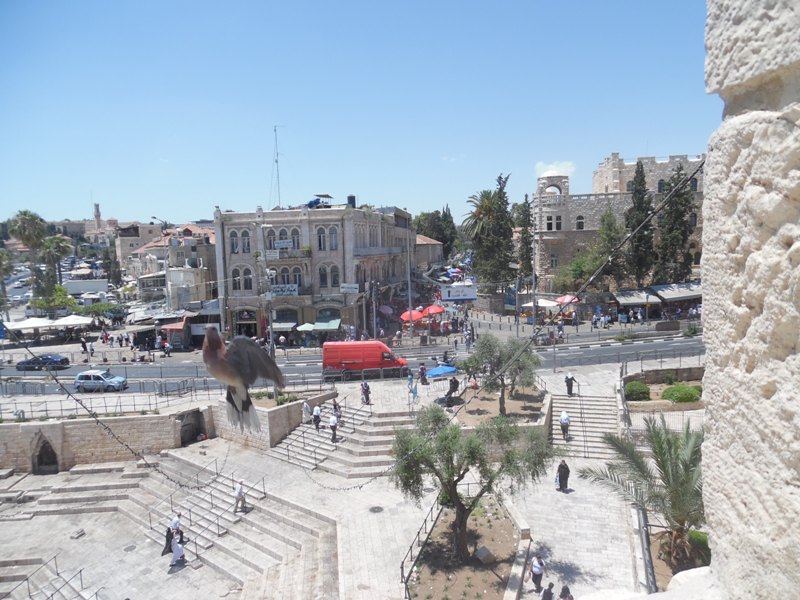
The only village outside of Jerusalem in the early days was Silwan, which contained 60-90 homes. The people were known for their violence. The community of Sheikh Jarrah in East Jerusalem, where six families were evicted a few days ago, was established in 1865, and at that early time, was a place where all the families were related. When Jordan occupied the West Bank in 1948, the neighborhood began to grow. Many reports say the six displaced families lived in sheikh Jarrah for generations. While that is true, this propaganda does not mean from ancient times, but only from 1950 (70 years).
From 1922 to 1948 the total population of Jerusalem rose from 52,000 to 165,000, statistically two-thirds Jews and one-third others (Muslums and Christians). Jerusalem as we know it has only endured for seventy years. Many of the Palestinians that live / lived in East Jerusalem arrived during the time of British Rule. They became established after Jordan began to rule the city in 1950. When Israel finally recaptured the city a second time in 1967, there was a large exodus of Palestinians. Some of the exiled Palestinians who are now living abroad look forward to the fall of the nation Israel so they can return to their “Homeland.”
The situation is complex, and there are many more stories. You can read some of them in my book: Israel Stories for your Journey.