
How I Found the Message of Revelation
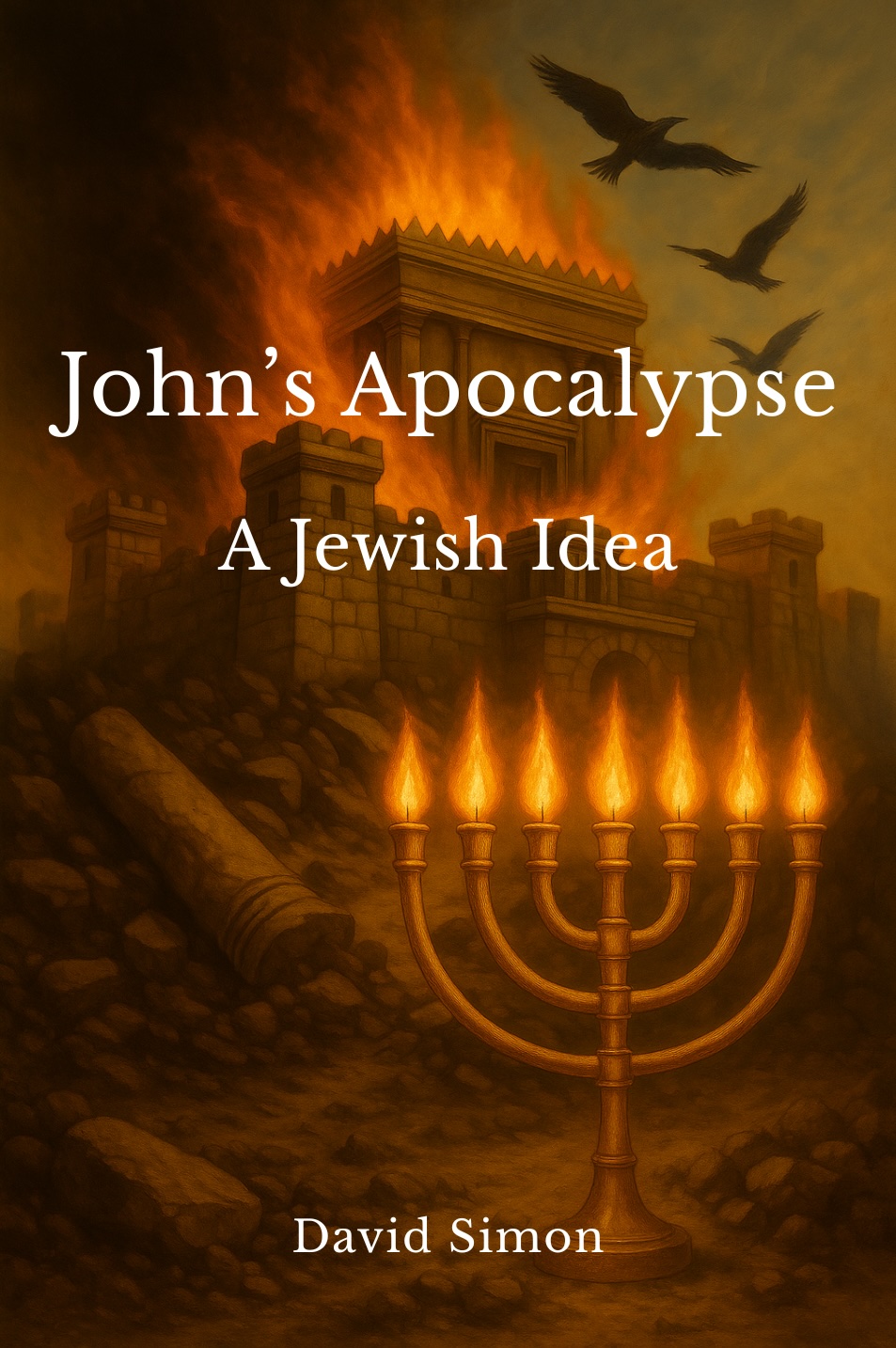
Today I am celebrating! I have just completed and published a new book, my seventh book, that is a commentary on the Apocalypse (book of Revelation). The research and writing of this book is the conclusion of a long journey.
The Birth of an Idea
Ten years ago I had the idea that led me to writing this book. A moment of realization sparked through my brain as I was watching a memorial service related to the plane crashes and the fall of the World Trade Towers on September 11, 2001. Emotion filled the hearts of people in our country and around the world as they remembered the tragedy that occurred fourteen years before. For some unknown reason, I thought, “John wrote the book of Revelation about twenty years after the destruction of the Temple in Jerusalem. He and many from his country (and Jews from all over the world) still felt the pain and mourned the loss of the holy site that had once been the center of their religious traditions.
I had a revelation at the moment that John did not write the Apocalypse as a revealing of the future, but to answer a deep-seated and emotional question that arose from the not so distant past. John, and every other Jew in the world, wanted to know why God allowed the total destruction of the location “God chose as the dwelling place for His Name.” (Dt 26:2)
I could not get the idea out of my head, so I began to read and write. The first chapter was easy. I approached the idea of understanding John’s writing about the recent past by relating his words to the first chapters of Ezekiel. The deported priest and writer of the book bearing his name survived the first destruction of the Temple by the Babylonians in 586 BCE. As Ezekiel mourned the loss of the first Temple, he saw God pick up the altar and bring it to Babylon where “a figure like that of a man” appeared and spoke to him. Likewise, “one like the Son of Man” spoke to John from the Holy Place of the Temple where the lamp of the Menorah was still lit.
The Trail of Discovery
I made some amazing discoveries as I wrote (like the way four triads of words for an outline for the book of Revelation) that I had never seen before. Seeing the book of Revelation give hope to the survivors of a horrible past rather than providing a blessing (and great glee) to believers (who are always imperfect) by allowing them to see the destruction of an unbelieving world gave me fresh hope and a desire to discover where the text would lead me.
New insights came regularly as approached the Apocalypse from the perspective of how the world ended for John rather than guessing how civilization would end in some nebulous, distant future. And the text of the Bible supported my ideas as God told John the things in the vision were imminent, not over a hill and across a long hidden valley containing multiple millennial periods of years before the culmination took place. (if this sounds confusing, my book John’s Apocalypse will explain it by showing the three places in Revelation chapter 1 and also at the end of the book where God says the events described in the Revelation are from John’s time rather than some distant future.)
Handling Snags and Detours
For months the work went smoothly until I hit some snags, like, how do the four horsemen fit into John’s story? And then I read Zechariah 1 in its entirety rather than the short proof-text version seen in many commentaries. Passages that once were self-contained connected to form a coherent intended storyline (especially when compared across chiasms – explained in my book, blogs are too short).
There have been many detours, many twists and turns, and many questions along the way to writing the book. (Which is why it took ten years!) I found it necessary to discover a biblically sound purpose rather than a folklorist or a kabbalistic numerology explanation for the number 666. (gamatra was not popular until a century or more after John died, although Merkabah mysticism appeared at the same time John wrote the Apocalypse.) My research took time because I would not settle for trite answers to conflicts that arose in the path the Bible was taking me. With study and reading, answers came through first-century authors and eyewitnesses to the events John is writing about. First-century author Josephus explains many of the sensational snippets that John drops into his narratives.
The Journey’s Successful Conclusion
The journey to writing John’s Apocalypse was long, but very fulfilling. I discovered a book with provable events rather than fantastic tales. The once confusing Book of Revelation came out from under its shroud to coalesce into a truly understandable book of the Bible. My new 356-page book explains everything so the reader can understand, and with references that go further in detail for the curious. I encourage you to pick up a copy today at one of these links and read it.