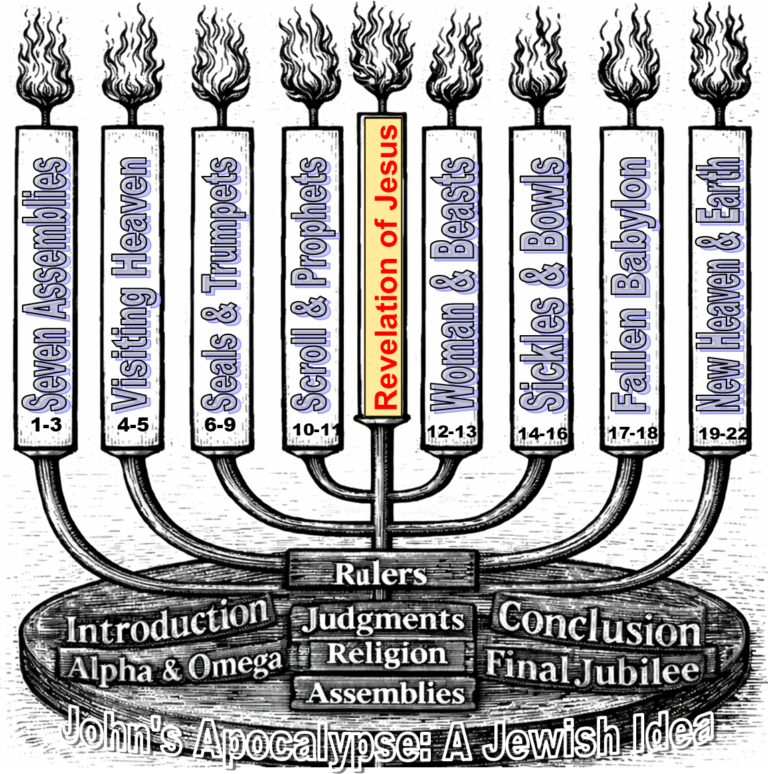
Who are the strange creatures in Revelation?
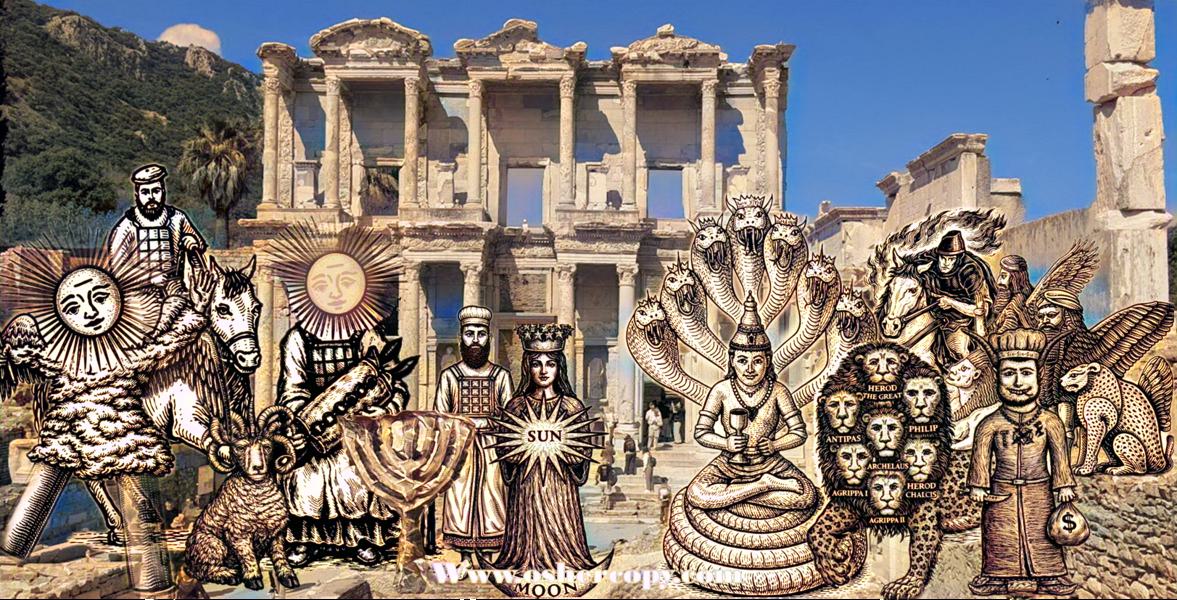
John’s intriguing cast of characters in the book of Revelation (such as the Dragon, Beast, Harlot, Pregnant Woman, Locust, New Jerusalem, etc.) has bewildered and confused most commentators. One author says John created the grotesque imagery to disguise anti-government political ideas he desired to express. Another writer says these creatures symbolize secret messages from God. A few people describe the personages as originating from ancient mythology. Most scholars link each of the personages to Old Testament images developed by Daniel or Ezekiel.
Why did John insert strangeness in the Apocalypse?
One of my seminary professors, James Blevins, taught “Revelation as Drama.” He said John wrote a seven-act play to be presented on the stage in Ephesus. With this idea in mind, and envisioning the characters I saw on stage at the Broadway production of “The Lion King,” I can say that strange characters heighten interest, create curiosity and invite questions about meaning. I think John inserted the unusual characterizations in the Apocalypse to provoke attention and create curiosity.
John did not place the characters in his book to be weird. The Bible author placed each unusual picture in the Apocalypse with a specific purpose. Each personage is a tailored picture including specific parts that readers of the Revelation (the revealing) could understand. While writing my book, John’s Apocalypse: A Jewish Idea, I discovered one interpretive key that helped me unlock the meaning of every major personage presented in the Apocalypse. The good thing about the Apostle John is that he is consistent, and this key can open the meaning behind every picture.
What is the key that unlocks the pictures?
John presents the key to his pictures in Revelation 1:12-13 where John says, “I turned around to see the voice that was speaking to me. And when I turned I saw seven golden lampstands, and among the lampstands was someone like a son of man, dressed in a robe reaching down to his feet and with a golden sash around his chest.” The elder continues with a description to tell about the personage he has seen (with themes from the books of Daniel and Ezekiel), “The hair on his head was white like wool, as white as snow, and his eyes were like blazing fire. His feet were like bronze glowing in a furnace, and his voice was like the sound of rushing waters. In his right hand he held seven stars, and coming out of his mouth was a sharp, double-edged sword. His face was like the sun shining in all its brilliance.”
The clue to the first personage, “someone like a son of man,” links to his location. John saw a priest tending the menorah in the Holy Place of the Temple in Jerusalem. The written description begins by telling how the man’s clothing. He was wearing a long white woven tunic made of fine linen. A gold, blue, purple, and scarlet sash made of yarn holds everything in place as the priest performs his work. (Ex 28). The picture begins with the presentation of a normal person, a common priest performing the twice-daily ritual of tending the wicks to maintain the symbolic continual presence of God in the Temple.
I think John also wants his readers to visualize a picture of the High Priest’s clothing.
The context of the picture
The reader must understand that at the moment John saw someone like a son of man maintaining the continual symbol of lights in the Holy Place of the Temple, the holy edifice in Jerusalem no longer existed. The place was in ruins, completely demolished, with the ground so scoured that the building’s foundation was gone.
Titus had the menorah that once sat in the Holy Place transported to Rome. The Arch of Titus in Rome shouts out that John could not possibly see the lamp in the Temple because the powerful pagan emperor from a foreign land had confiscated Israel’s symbol for God’s presence and its light no longer shone.
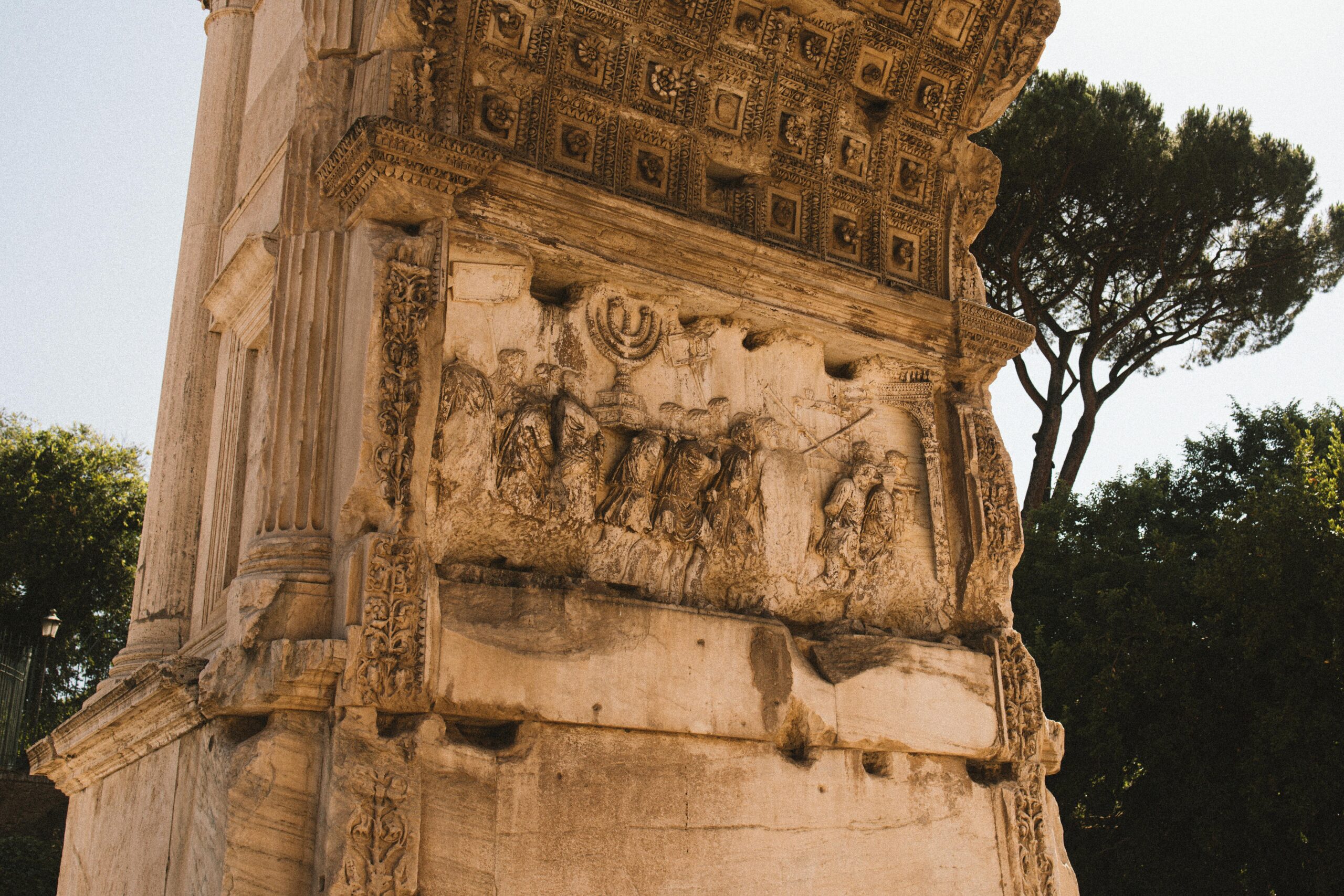
But John wants to tell his readers that the eternal light of God still shines. The Apostle can see God’s brilliant light and that one like the Son of Man maintains the important practices of the Temple. Ezekiel presents the same picture at the beginning of his book with a powerful picture of the presence of God transporting the Temple with its altar to heaven. John and Ezekiel communicated 1) God was still very alive, 2) God was very much in control, 3) the reason for the Temple’s destruction, and 4) a hope for the restoration.
The second part of the quoted text from Revelation 1, verses 14-16, appears more difficult to interpret, but when seen as communicating the original Old Testament message to the people of John’s era, the message becomes relevant.
The pattern to contrast
Beyond the setting of the presented picture, John wants his readers to contrast each image against the presented pattern of the High Priest that appears in the Torah. The High Priest wears a turban on his head with a message, “Holy to the Lord.” The High Priest is the head of a family and a person of experience (white hair). He is wearing ceremonial clothing to distinguish him (pure white). His feet find firm support (ask, what is holding him up). The personage holds a symbolic object in each of the pictures (the object is symbolic). John also describes the attitude of the person.
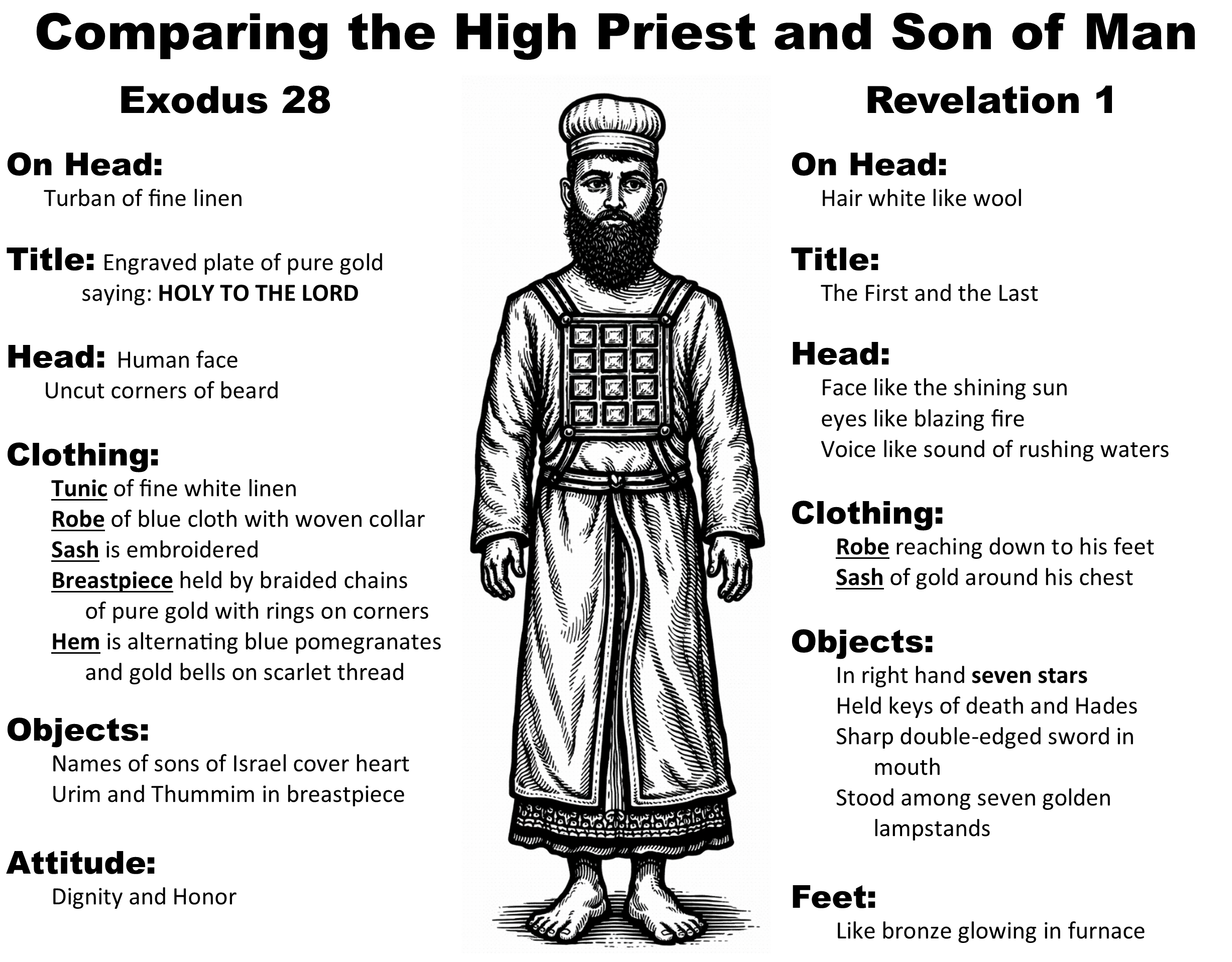
How does this all work?
This blog would be lengthy if I wrote everything here, which explains the reason I wrote a book. John’s Apocalypse: A Jewish Idea. The book is available in both electronic and print formats. The book includes pictures with descriptions and contrasts for each character. These pictures use the keys shown above to remove the mysterious appearance of each image and to explain exactly why John included them and what they mean.