Does Purim appear in the book of Revelation?
From my earliest days of reading the Book of Revelation, even before I began to study it, I noticed something interesting. Many signs of the Jewish feasts and fasts appear in the second and third chapters of the Apocalypse.
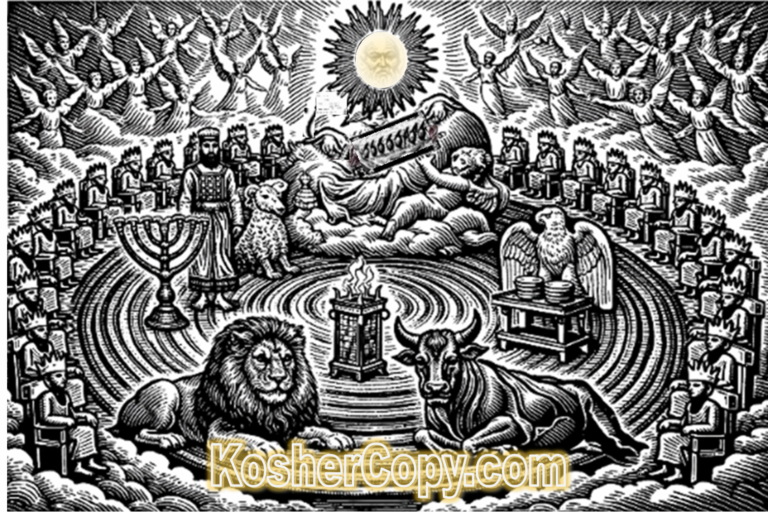
This fact should not be surprising because the Book of Revelation is a very Jewish book written by a very Jewish author. [to explore more in-depth click here and order a book: John’s Apocalypse: A Jewish Idea] The Book of Revelation begins with a litany of praise to God, “who is, and who was, and who is to come” (Ex. 3:14). Then the chapter continues with John looking into the Holy Place of the Temple and seeing the Son of Man walking in the Menorah’s light.
THE MENORAH IN THE HOLY PLACE
It never ceases to amaze me that some people argue the “seven golden lampstands” are not a menorah; it’s almost like attempting to erase everything Jewish from the book of Revelation. Seven individual candles do not appear anywhere in the Old Testament, although a story about ten lamps appears in Matthew 25:1-13 … but its purpose is much different. The Menorah, which appeared in the Temple of God before its destruction, is the seven golden lampstands (or one lampstand with seven oil lamps upon its branches). (I should include here that Solomon’s Temple held ten seven branched menorahs, so multiple menorahs appeared in one place. ) The Arch of Titus in Rome displays an engraving of its appearance. There are several eyewitness engravings in Israel. The description appears in Exodus 25:31-40; and Menahot 28b.

THE FEASTS AND FASTS OF REVELATION
From my first reading of Revelation, and even after I actually studied Revelation 2-3 (entitled in most books “The Seven Churches”), the existence of the Feasts and Fasts of Israel appearing in the Apocalypse was just an idea. At some point in my studies, several, and then all the individual feasts and fasts came into sharper focus.
Here they are in order: Ephesus = Rosh Hashanah; Smyrna = Yom Kippur; Pergamos = Sukkot; Thyatira = Chanukah; Sardis = Purim; Philadelphia = Passover; Laodicea = Shavout. The appearance of the seven feasts and fasts in Revelation 2-3 was a wonderful discovery. I entitled the section “Seven Assemblies” because once I definitely saw the Jewish festivals included I could not erase them. How do the Jewish Festivals and the seven Churches work together? See my book.
A DEEPER DIVE INTO THE TEXT OF REVELATION
My discovers about the seven feasts and fasts did not stop at Revelation 2-3. In my further reading I discovered each sub-section of Revelation is built around the seven days of creation (also detailed in my book). That means the first day of creation (God said, “Let there be light”) = Rosh Hashanah. The second day of creation when God separated the waters from the waters = Yom Kippur. The third day of creation, when God created dry land and plants = Sukkot; the fourth day of creation, when God made the Sun, Moon and Stars = the Festival of Light; The fifth day of creation when God made Birds to fly in the waters above and fish to swim in the seas below = Purim; the sixth day of creation when God made land animals and humans = Passover; the seventh day, when God rested is the festival of fruit.
Everything is in order and fits! Amazing!
PURIM
Since I am writing this blog on Purim, I will narrow the focus.
The church at Sardis and the fifth day of creation = Purim … how??
THE ASSEMBLIES AT SARDIS
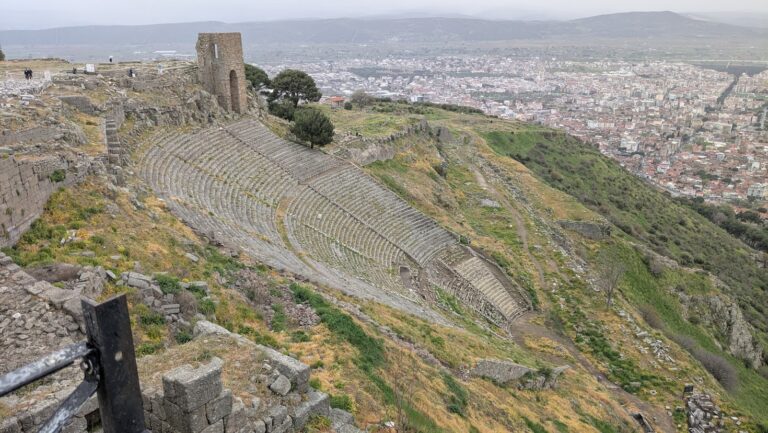
To begin with, Sardis was the capital of the historic Lydian Empire. Cyrus the Great conquered Lydia about 547–546 B.C.E. It became the westernmost of the 127 provinces listed in the Book of Esther (from which Purim originates).
Second, during the reign of Antiochus III, ruler of Persia (223–187 BCE) the King sent two thousand Jewish families to Sardis to stabilize the western frontier of Persia. This influx of Jewish citizens built a synagogue in Sardis and also would have celebrated Purim in the walled city.

THE STORY OF PURIM
The story of Purim features opposites: The good guy: Mordecai the Jew and guardian of Esther (everyone applaud and cheer); and also Haman the wicked vice regent of Persia (everybody boo!). Revelation 3:1-6 serves to remind us that we should be good people, symbolically dressing in white.
During the story of Purim, after the discovery of Haman’s plot to kill the Jews, Mordecai relays a message to Esther, who is the new Queen of Haman’s plot.
Queen Esther, who is living the life of luxury with a Gentile king and eating his rich foods, gives an excuse that she can not go into the king. Mordecai replies to the Queen who has soiled her garments, “Do not think that because you are in the king’s house you alone of all the Jews will escape. For if you remain silent at this time, relief and deliverance for the Jews will arise from another place, but you and your father’s family will perish. And who knows but that you have come to your royal position for such a time as this?” (Esther 4:13-14).
Of course, Esther relates this to the king (who is in the room with Haman), and the king is shocked. The king recognizes Haman as a thief who is trying to rob the Queen and her people of their lives. (Jesus said to the church at Sardis, “I will come like a thief, and you will not know at what time I will come to you.”) The king ordered Haman hanged.
Mordecai is like one of the few dressed in white. He takes Haman’s place and is victorious. Hopefully, you have seen the Story of Purim in the fifth church of Revelation.
THE FIFTH DAY
I mentioned above that on the fifth day God created the birds in the sky and the fish of the sea. In the book of Revelation, every fifth item in a list shows how Heaven above relates to the world below (or vice versa). In the book of Esther, Mordecai represents Heaven and Haman represents the world below.
AND AT THE END
The Book of Revelation uses a literary style called chiasmus. That means it contains reflective mirrors. The first chiasmus (or mirror) contains the section on the Seven Assemblies. The reflection is in the last section, where John describes the New Creation. In this New Creation, God restores the things that evil times destroyed on earth. That includes the seven Jewish feasts and fasts. Each Festival is listed (like the churches) individually.Here is where you will see the Festival of Purim: The Mishnah (Megillah 1:1) states, “Cities which have been walled since the days of Joshua ben Nun read on the fifteenth; villages and large towns read on the fourteenth, Except that villages move the reading up to the day of gathering.” Notice that the New Jerusalem is a walled city. This relates to the celebration of Purim.
HAPPY PURIM
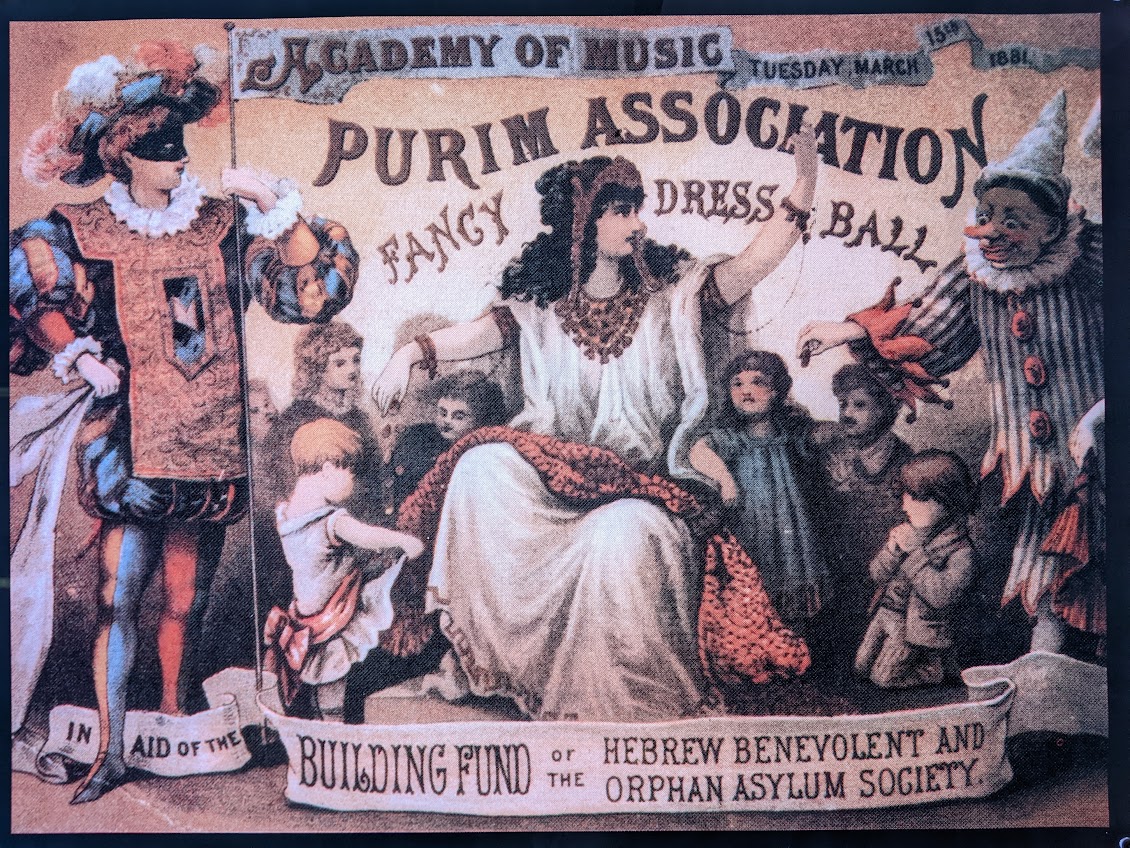
I hope everyone has a Happy Purim. Mordecai told us, “observe the days as days of feasting and joy and giving presents of food to one another and gifts to the poor.”