6 Fabulously Famous Foods for an unforgettable Passover Seder
Passover is a festival of celebration! The Jewish people gather together each year at this time to remember and rejoice in the gift of freedom. Once we were an enslaved people, but then God gave us our freedom! The story of the Passover brings life and happiness and joy.
Passover Celebrations include Food
In the course of human life, it is common to celebrate momentous events by eating. We do this at weddings, graduations, on holidays, and on most other special occasions. Food and feasting often accompany happiness and joy. The Passover meal as I was growing up was like a full Thanksgiving dinner. My extended family came together to tell lots of stories, eat lots of food, and to laugh. The Passover Seder is a time we play together, eat together, tell many stories, and sing together.
When families gather for Passover, everyone knows what the Seder meal will include, so they come hungry. This element of preparation requires a diligent person to plan and cook the meal. They need to buy meat, Motzah, morror (bitter herbs), ingredients for charoset, the wine (at least four cups), the egg, and of course the vegetables.

Sometimes we take the preparation of the Seder meal for granted. This is not to be so on Passover, for the story of our freedom is told through this feast. The meal includes symbolic foods, starting with the green vegetables. While it might appear that going to the store to purchase enough food for all the members of the family is a simple matter, we are reminded of a time before stores existed, when the family had to raise enough food for themselves or they would starve!
The Meats of Passover
The Passover ramp up often includes Gefilte Fish. This flavorful appetizer (some like it, others hate it, very few would say it has no flavor. Do you think it is good or bad?) comes to us through the Ashkanazi branch of our family. This fish dish is a Baltic Sea delicacy. It is a bone free version of s carp, mullet, whitefish, or pike ground or minced fish mixed with spices, matzo meal, carrot and potato. The store bought version is packed in gelatin, and it is served on a leaf of lettuce.
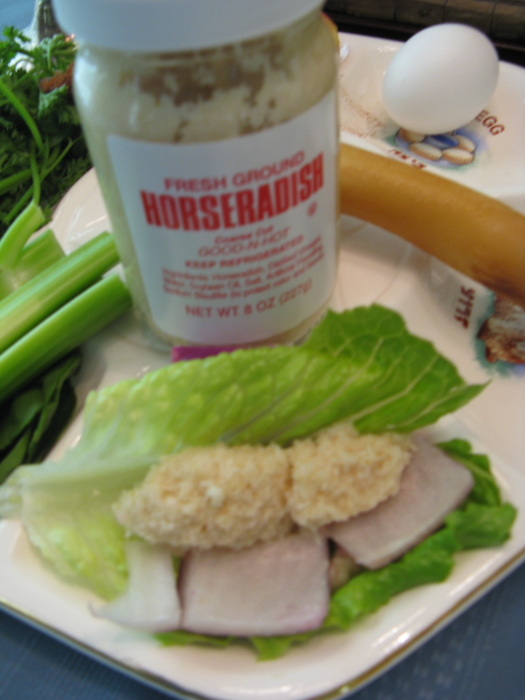
The meat in the middle of the table at the beginning of the meal is meant to be lamb, but at first glance it is obvious that someone got there first. The only remnant of the the lamb is a shankbone which is stripped bare of any meat, and even looks like it has been boiled. The mortsel will be hard to carve, and will offer no nourishment to feed anyone.
Actually this remnant of what used to be lamb reminds us of our Temple that used to sit in Jerusalem, but was destroyed by the Roman army in 70 CE. The bone is a reminder that we are currently in mourning. The prayers and Seder will remind us to hold out hope, for eventually a new Temple will be built, larger and grander than the the Temple that was destroyed.
The real meat will come later, in an hour or so, when the regular meal is served. In my home it was always turkey, but in other homes it is chicken or duck, generally some kind of poultry. Without a doubt there will be plenty of meat, because we are in actuality holding a Thanksgiving feast in celebration of our freedom from slavery.
The Flat Bread
A famous Jew called Jesus of Nazareth once quoted Moses (Deuteronomy 8:3) by saying, “’Man shall not live on bread alone, but on every word that comes from the mouth of God.” These words sum up our bread plate at Passover. Officially there are three pieces of flat bread, called Matzo in order to remind us that our forefathers left Egypt in such haste that there was no time for the bread to rise. The secret is to make the bread without leavening and process the mixture as little as possible.
The three pieces of bread represent the two loaves we normally eat on the Sabbath. (On Fridays while we were traveling in the Wilderness, God gave us two servings of manna on Friday because none would be provided in the morning on Shabbat.) A third piece of matzo is included to remember this is the night of unleavened bread.
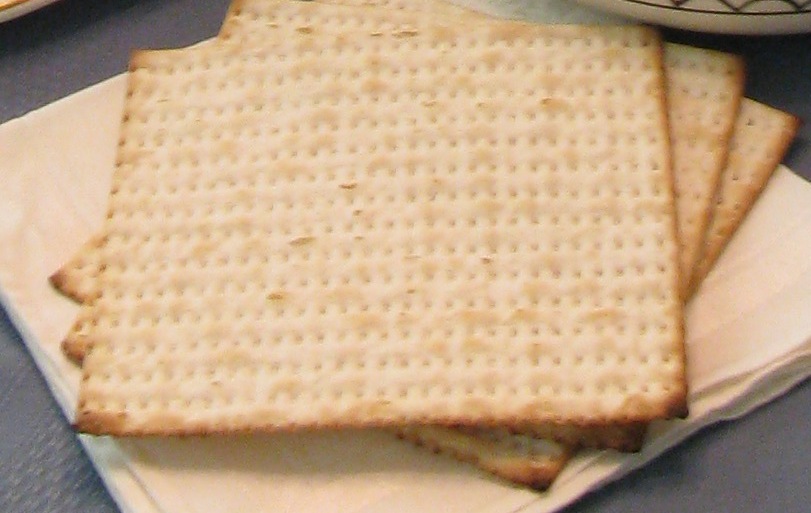
During the first part of the Seder, we eat the top piece and half of the second piece of matzo for taste. Later we eat the bottom piece of matzo just before our real dinner is served. After dinner we play a game to find the lost half of the middle piece of matzo as our “dessert.”
Actually, there is also a box of Matzo or two placed by the table so we can have plenty at dinner and through the week.
Passover Vegetables represent Life
While sometimes vegetables are given to balance the meal, or as a healthy food, on Passover green vegetables mean even more. They speak of life, for the world is reawakening to life once again. Our gathering is at the Spring Harvest time and we are called to give thanks to God who gives our crops and our food (even if we go to the store, we must remember it all starts with the planting of crops).
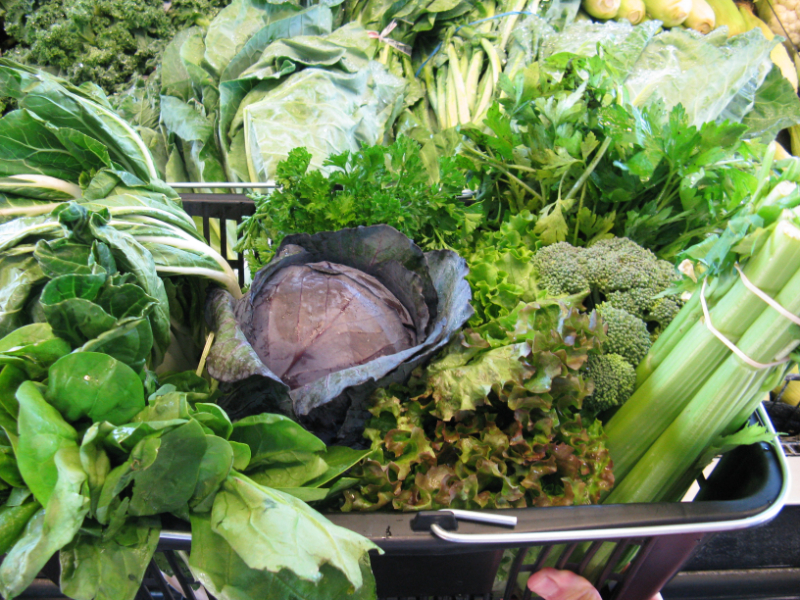
The green vegetable is dipped in salt water to remind us of the tears our forefathers shed when in slavery. They had to produce crops, not only for themselves, but first and foremost for their taskmasters, the Egyptians. The saltwater calls to our attention the hard work of their physical toil, and the difficult reality that sometimes the seeds we sowed do not provide as much food as we would like and we go hungry. Bitter Herbs remind us how bitter life can be under slavery, in drought, under persecution, or when harsh circumstances come our way.
A Bitter-Sweet Passover Moment
In your daily life, are you a slave to your existence? Is your survival a day to day matter, getting the things done which you must, coming home tired, and then doing the same thing the next day? Or do you take time to celebrate each day and give thanks for all things – small or great – which God has afforded to you for your enjoyment?
We eat the green vegetable to remind us to give thanks. And also we eat Charoset, and partake of four glasses of wine, to remind us that simple thanks is never enough in life – we must see even the small gifts from God with great joy and allow simple thanks to overflow into abundant rejoicing!
Passover is a lesson on new growth and new things. It is the story of our new nation. The descendants of Israel left slavery to become a new people with all the trials and possibilities that would bring. The purpose of this feast is to call us to the perspective that we must give thanks for all things (whether easy or hard); and we must show gratitude to the God who provides everything (small and great); and that thanks is not enough, for God desires us to live life in joy, no matter the circumstances.
And then there is wine
The wine represents our joy in life. We could drink water, but on the festive night of Pesach, that is too plain. The fruit of the vine has more taste, and lots of history. Our people used to produce the best wine in the world in the days of the Temple. This drink was part of our Temple offerings, and with fermentation gives us something extra special.
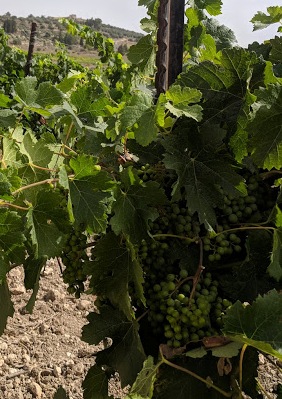
During the evening we drink at least four cups of wine. Four is a special number, like the four sons or four questions (or my four servings at the regular dinner time). For the wine it represents 1) a cup to celebrate God hearing our prayers during the time of our slavery in Egypt, 2) a cup for God’s work to free us, 3) a cup for our release from Egypt, and 4) a cup which looks forward to celebrating the Passover in Jerusalem.
And there is a fifth cup of wine, which only Elijah drinks as we remember the need for a Messiah.

The Passover is a celebratory event. I have written three books about this service. The first, Spring: Connecting with God, remembers famous Passovers of History. We did better when we celebrated all-in full Passover Seders. The second A Christian Passover in the Jewish Tradition is written for Christians to remember their foundations and honor our traditions. A third book Psalmatic Seder draws the Passover story from the book of Psalms and includes lots of songs in the service.
I highly recommend the celebration of the Seder. If you need help, order one of my books. Because they are on Kindle, you can have them today, if you forgot to order a Haggadah.