
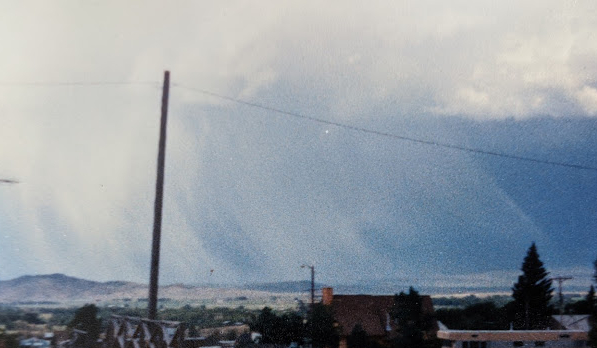
Presidential Success: Coming out of the reign
Wordsmiths from King Solomon to Poor Richard, and even beyond, dispensers of wisdom, have issued adages without ceasing in order to promote wisdom. One of the most famous sayings goes, “You don’t have sense enough to come in out of the rain.” These words are often spoken to convey a need to uses common sense.
We all struggle with these words, even Presidents of our nation have been known to get caught not knowing when to come in out of the rain.
President William Henry Harrison
William Henry Harrison, who was born February 9, 1773, is a prime example of a person who got wet once too often. This landed gentry grew up in a three story brick mansion called “Berkeley,” along the James River in tidewater Virginia. His father, Benjamin Harrison V, a wealthy planter, served in the Virginia House of Burgesses, was a delegate to the Continental Congress, signed the Declaration of Independence, was the fifth governor of Virginia, and carried a few other accomplishments along the course of life.
William Henry Harrison, his son, grew up on the plantation, and at times helped out with the work needed, and became muddy experiencing the tasks that would serve as the foundation of his life. Young William always knew, as the youngest of nine children that he would inherit very little of his family’s royal heritage, except for the family name.
When the time came for Benjamin Harrison’s youngest to leave home, young William took an army commission. He went west, where he saw action during the Indian wars and in the war of 1812. In 1794, he fought at the Battle of Fallen Timbers, which ended the Northwest Indian war. In 1811, he put down the rebellion of Tecumseh at the Battle of Tippecanoe, and in 1813, he lead the infantry and Calvary at the Battle for Thames in Upper Canada.

As William Henry Harrison grew older his connections and experience afforded him various opportunities to serve as Governor of the Northwest Territories, as an ambassador, and in congress. The old military with great accomplishments, after years of service was a “westerner” who retired on a piece of land upon a hill at a picturesque bend along the Ohio River.
But retirement did not last long, for the Whig Party enlisted him to run as the President of the United States. He won the 1840 election to become the first Whig elected to the presidency, the last of the Presidents to be born before the Revolutionary War, the oldest man to serve as President of the United States until Ronald Reagan was elected in 2017.
The thing is, you would expect a man of 68 years old to be smart enough to come in out of the rain. But inaugurations are important, and old Tippecanoe had things to say (his inauguration speech is the longest in our history!), son on Marcy 4, 1841, and our nation’s ninth president got and caught cold. He was given the most innovative medical care of his day, which included bleeding by leeches, but he still died, after serving only 31 days in office.
President John Tyler
John Tyler, born March 29, 1790, was the first vice-president who received a feared knock on the door. On April 5, 1841, Fletcher Webster (Daniel Webster’s son) rode non
stop with an important piece of information for the man who grew up on Greenway Plantation, only seven miles from William Henry Harrison’s family. The young messenger told Tyler, “President Harrison became ill and died.”
John Tyler was shocked. He did not even know the President was ailing. The role of the Vice-President, until that very moment was to go home and to carry on whatever business was normal. Tyler was not sure what to do. Until that time in the history of the United States no President had ever died in office. No one was sure what process to follow. John Tyler ate breakfast, and traveled to Washington to see how he could help.
Of course, the history of this event is known. After some discussion, William Henry Harrison’s running mate was sworn into office and came into his reign as President of the United States. The lesson, always be prepared for any duty, in case your running mate suffers the effect of the weather.`
President Abraham Lincoln
A cold rain is not as unusual as one might suppose on inauguration day. March 4, 1865, the date of Abraham Lincoln’s second inauguration turned out to be rainy. 50,000 people were present for the day’s formalities. The first portion of the program was held inside the Senate chamber with Senators, Representatives, Supreme Court Justices and other dignitaries crowded inside.

The program began with the swearing in of Vice President, a man specifically chosen by Abraham Lincoln because of his Southern ties. Andrew Johnson, born in Raleigh, NC, had, as a young man moved to the frontier in Tennessee. He worked as a tailor before being elected as mayor of Greenville, to the state senate, to the United States House of Representatives, and as Governor of Tennessee between 1841 and 1857. He was elected as the United States Senator from Tennessee in 1857, and became the only Southern Senator who continued his term of service after the succeeded of his home state.
Andrew Johnson was rewarded as a commission as the military Governor of Tennessee, and his selection to run with Abraham Lincoln for the office of Vice-President in 1864. The Republican Party (at that time called the Union Party) asked Johnson, a Southern Democrat to serve to help enlist votes of Southern sympathizers.
After the inauguration, President Lincoln led the inside participants through the Capitol Rotunda and onto the East Front inaugural platform to greet his supporters and give his inauguration address. The president, knowing the war was coming to an end, spoke for twenty minutes on forgiveness and asking the North to be charitable in overcoming the crisis of the Separation.
On that day, unlike the day of Harrison’s inauguration, it was Andrew Johnson who became quite ill. In truth, he had been sick earlier, but after the inauguration, the new Vice President went into seclusion for a period of time. Word came out that the Vice President had taken whiskey as medicine, and several senators put forth a resolution for him to resign. Abraham Lincoln interceded by stating, “I have known Andy Johnson for many years; he made a bad slip, but you need not be scared; Andy ain’t a drunkard.”
History Repeats Itself
As it happened, Vice President Andrew Johnson survived the attack on his character and his sickness. He soon recovered, and fulfilled a 42 day term as Vice President. Unfortunately, as history shows, while attending the Theater, John Wilkes Booth, a Southern sympathizer fatally shot President Lincoln on April 14, 1865.
The nation was shocked at the assignation, and with the inauguration of Andrew Johnson, sought unity. Republican Senator Ben Wade of Ohio proclaimed, “By the Gods, there will be no trouble now in running this government.”
The unity lasted less than two years. As the nation sought to heal its wounds, Johnson broke with the Republicans of Congress, who sought citizenship for the freed slaves and sought to help the old Southern leaders to their former positions. Articles of impeachment were drawn up and passed. Andrew Johnson refused to step down, but was saved from conviction because seven Republican Senators thought it would be a disgrace to the United States.
Can Rain end a President’s Reign
As can be seen, a cold winter’s rain storm does change things up. For President Trump, the rainy day of his inauguration did not change the outcome. Republicans said it was a sign of the cleansing that would begin to take place. Democrats declared the storm clouds as a foreboding omen. In this case of history, the President served out his full term, and it was never necessary for the Vice-President to step up to service.
President Trump’s decision to stay out of the rain was more disastrous as President Emmanuel Marcron and Chancellor Angela Merkel laid a floral wreath at Compiegne, with the presence of Justin Trudeau in our President’s absence. The elderly veterans who were present did recall that they did not stay away from either D-Day or the memorial celebration, even though it was raining both days.
Will the President survive the impeachment? Only history will tell. It is a strange thing. Just remember, common sense dictates, do come in out of the rain. And when it does not, remember your umbrella.


