A Fun-filled, Innovative Musical Passover Haggadah
When is the last time your Passover traditions changed? For years I used the same Haggadah, and then I decided I wanted something new. As I looked I saw shorter and simplified Seders, but I was looking for something more, and not less. I found traditional Seders, some of which were a throwback to the seventeenth century. I found some decorative Haggadahs, but none were what I was looking for.
Searching for a different Passover
I wanted something more innovative. I was looking for a book with less reading and maybe some some new way to tell the story. Our family is musical, and I felt some harmony would add to the evening. I knew there must be some traditional Passover songs, but I did not see any tunes in the Haggadahs that I was finding. While I did not find any musical guides for the evening, during the search I found a website with a variety of historic Passover songs. (If you love music, this is a website you must see!
I did some research to see how Passover traditions have changed over the years. The oldest Passover Haggadahs we know of were assembled about a thousand years ago. They were hand printed because they date to a time before the printing press was invented. Some of them are quite simple, others are more artistic and elaborate.
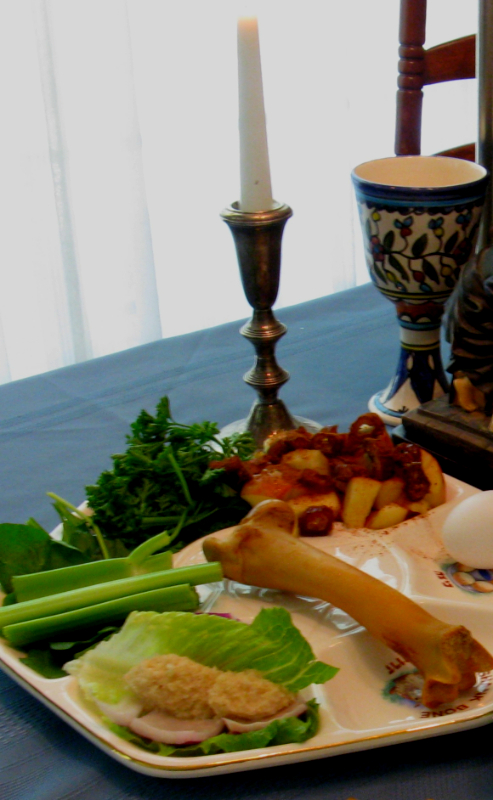
Several books I read said our current Seder traditions were developed in the first or second century CE, shortly before or after the destruction of the Temple. Traditions for this period are recorded in the Mishnah.
The instructions of the Mishnah authors start the evening in this way, “The tanna describes the beginning of the Passover seder. The attendants poured the wine of the first cup for the leader of the seder. Beit Shammai say: One recites the blessing over the sanctification of the day, i.e., the kiddush for the Festival: Who blesses Israel and the Festivals, and thereafter he recites the blessing over the wine: Who creates fruit of the vine. And Beit Hillel say: One recites the blessing over the wine and thereafter recites the blessing over the day.“
Looking at Passover’s past
I always felt the Passover service was older. Each year we talk about how Moses commanded the people of Israel, while still in the land of Egypt, to to take a lamb for the family, with instructions on how to cook it. During the forty years in the wilderness, each family ate the traditional dinner annually. In the historic period of the of Kings of Judea, there were regular celebrations that were mentioned. I wondered what they were like.
Because the book of Psalms is Israel’s book of worship, I looking to see what it said. Many of the Psalms were written in the days of the kings, some by King David and others by his musician Asaph. I found several Psalms that talked about the Passover. We recite the Hallel Songs, 113-118 and the Great Hallel, Psalm 136, during our Seder each year. I found the Pesach story told in Psalms 78 and 105. I hit the gold mine of past Passover Seders and had a look at the Haggadah from more than 2,500 years ago! As I compared the story found in these Psalms to our service of today, the stories were similar.
But there were also differences. Like for instance, the order of the Ten Plagues. The comparison looks like this:
Exodus Psalm 78 Psalm 105
Blood Blood Darkness
Frogs Flies Blood
Lice Frogs Fish
Flies Grasshopper Frogs
Cattle Locust Flies
Boils Hail Gnats
Hail Sleet Hail
Locusts Cattle Fruit
Darkness Lightning Locusts
Death Death Death
To me, these differences are proof that genuine people were celebrating the Passover back then. They wrote music in the style popular for the day so people could remember the words, and each of the specific plagues found a place metrically and phonetically.
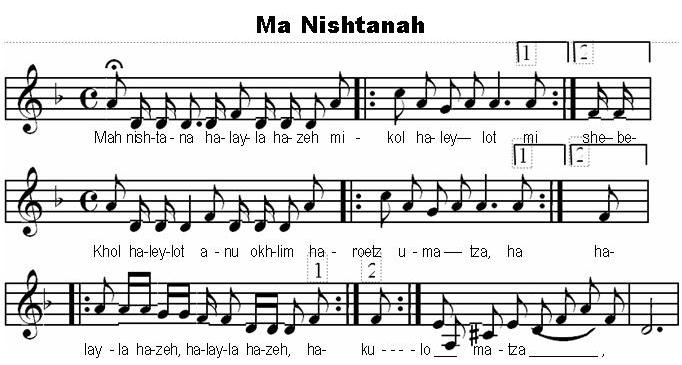
Deciding to write a musical Passover
In my search, I was not finding a musical book that fit what I was looking for. I had also found two historical Passover services that I wanted to share with my family and some friends. I have written books before, now it was time to create another document, and I feel the good things I try to do are always better shared.
The Haggadah was a refreshing success. The words of the Psalms caught everybody’s attention, and gave a freshness to the annual celebration. In the first year, when we were using a trial manuscript, we invited some musical instrumentalists. We played and sang the songs with a clarinet, oboe, and a bassoon. Everyone (even several friends who were not Jewish) enjoyed the evening, and stayed late.

Which I can now recommend!
I printed the Haggadah in preparation for last year’s Seder … and I was happy I did! We had a pandemic and could not open our home for a normal evening meal and retelling of the Passover story. No problem, I have a daughter that uses Zoom at work, why not do a virtual Seder! We invited immediate and extended family (some who have not see each other in years) and friends. Last year 48 people came to our Seder from nine states and four time zones. What a fun time.
Each person could order a Haggadah, and from New York to Florida to California and Washington State, we could all be on the same page. We assigned parts (page numbers were important), including the music that was played by pianists in New York and New Orleans. We sang along with clarinet and saxophone accompaniment also.