Three world religions and a major connect in Passover
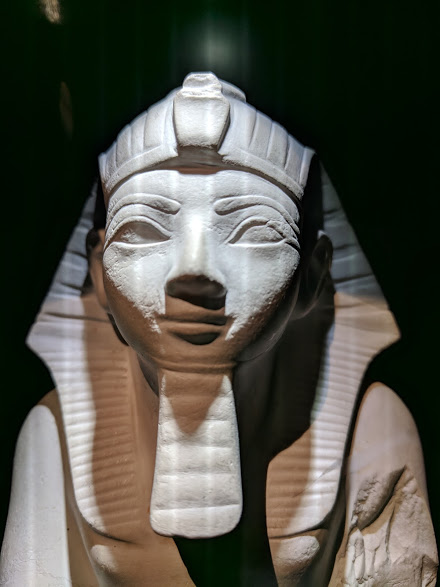
Passover is a unique celebration that can benefit every person that believes in one God. This evening dinner and celebration dates back to the time of Moses when the Hebrew people escaped slavery in Egypt, crossed the Red Sea, and began a forty year journey in the wilderness. The tradition of Moses is taught as a tradition within both of the world’s two largest religions: Christianity and Islam, and also in Judaism.

People of many faiths would benefit greatly by participation in an annual Jewish Passover. Joining a family in their full celebration of the Seder would offer outsiders a more complete understanding of their own personal faith. A person can not fully understand the traditions or learn the scriptures of another faith as an outsider. Inside participation and dialogue are important when a person attempts to grasp a major concept from outside the world of their own personal experience.
Passover is contained in the Holy Books
The story of the Passover is contained in the Hebrew Bible, which is a base document for the New Testament and the Quran. Scriptures contained in the holy books of Christianity and Islam testifies to the importance of the story of the Jewish Exodus from Egypt.
The Passover story is important to the Christian celebration of the Eucharist, Communion, and the Lord’s Supper. The Pesach celebration is found in the New Testament in Matthew 26; Mark 14; Luke 22; John 13-16; Acts 12:3; 20:6; 1 Corinthians 5:7; Hebrews 11:28 and other places. But Gospel accounts of Jesus’ Last Supper do not contain all the details because early Christians who came from a Jewish background continued to celebrate the Passover Seder at the time of its annual observance and felt future followers of The Way would always continue to do the same.

of Passover and how it became Easter.
The story of Moses and Pharaoh is also important within the text of the Quran. Islam as a Monotheistic faith stresses the importance of belief in One God alone. Dialogues between Pharaoh and Moses can be found in Al-A’raf 7:103-139; Al-Baqarah 2:47-50; Al-Imran 3:11-13; Al Anfal 8:52-57; Ta-Ha 20; Ash-Shu’ara’ 26:9-79; Ad-Dukhan 44:13-31, and other places.
Allusions to the Exodus from Egypt can also be found in Bahai writings and also in the Book of Mormon from the Church of Latter Day Saints (1 Nephi 4:2; 1 Nephi 17:24-26)
Overcoming Christianity and Islamic adaptations to Pesach
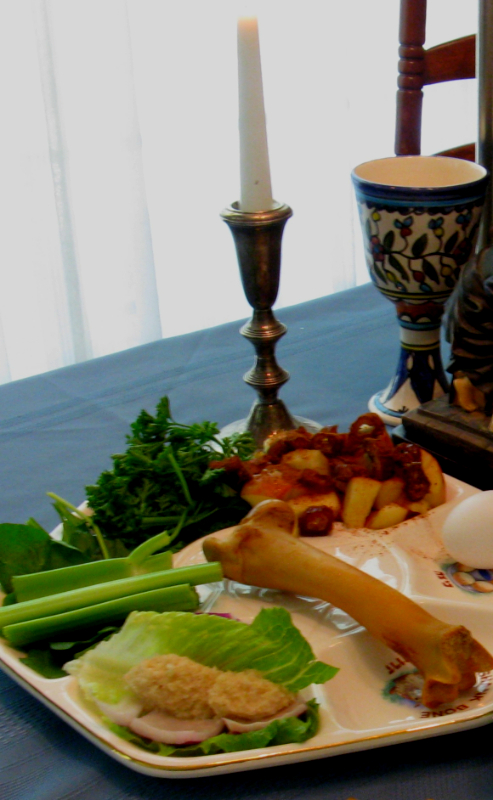
The Passover Seder feast which is honored by the Jewish people as an annual event is in its presentation much like a Thanksgiving feast in its quantity of food. And the huge banquet is only a small part of the evening. The Jewish people by use of a book called the Haggadah orchestrate a full retelling and reliving of the 3,500 year old exodus by special foods, teachings, recitations, prayers, responsive readings and songs. The entire event takes several hours as parents help their children experience the exodus from Egypt.

to help Christians understand the traditions of their forebearers.
The celebration of Passover is presented to most Christians in an extremely watered down version. By this, I do not mean the event is unimportant, because the taking of the Eucharist or Lord’s Supper has always been the central element of Christianity. Christians recognize that eating of the elements of bread and wine is taking of the body and blood of the Lord Jesus, either literally or symbolically.
Having grown up in a Jewish household, one of the oddest statements I hear in the Christian church is when I hear church leaders call the taking of a small piece of bread and a sip of wine a Passover feast. I sit there knowing that this would be like calling an eyedropper full of water the Pacific Ocean. It just isn’t true, and I wish more Christians would learn the traditions of the actual Passover Seder feast through participation.
Why Christians don’t celebrate Passover
The watering down of the Passover Seder within Christianity did not come out of necessity or from pure motives. The changes, and even an outright outlawing of holding a Passover Seder occurred because of racial tensions and power struggles. The signs of the racial struggles can be see as early as Acts 6:1, where “the Grecian Jews complained against the Hebraic Jews because their widows were being overlooked in the daily distribution of food.” The struggle grew broader in the early years of the church, first among the Jews and then from the Gentiles.
Throughout their history, Jewish people have always found it necessary to be vigilant around gentiles. Incidents of harm occurred to the family of Jacob (Ge 34:1), within Egypt (Ex. 1:8-114), and from neighboring peoples (Ex 17:8; Judges 3:5-14; ) One of the problems was that the Hebrew people had different religious practices and were told not to assimilate, but to remain true to their faith (Ex 23:24). Because of their stubborn believe in only one God, the Jews have found themselves facing persecution in every place they have ever lived.

portrayed at Yad Vashem in Jerusalem
The church was designed to be a place where all people felt safe (Acts 15; Eph 2:11-13) and where the entire world was to learn about Israel’s God (Mt 5:17-20), but very early this concept began falling apart. There came to be complaints from the Jews about the Gentiles, and from the Greeks about the Jews. (Acts 6:1)
The first few years of church history were difficult, and then things became worse. As is common in the course of human organizations, men began to desire power. This is exceptionally evident in the writings of Ignatius, who was martyred in 110 CE. He wrote in one of his letters that only ordained priests could serve the Holy Eucharist.
Ignatius also began to promote a hierarchy of priests, bishops and archbishops. Ignatius saw the serving of unleavened bread and wine in the Passover Seder the same as the sacramental elements, and therefore, in a break with the tradition of the early Apostles, he began to forbid the Passover. He wrote in the letter to the Smyrneans.
Passover recognition within Islam
Mohammad experienced the Passover traditions through Jewish people he knew in Mecca, Medina and across the Middle-East. He saw the Jewish people set aside a lamb to be roasted on the tenth day of Nisan in preparation for their annual Seder.
Mohammad in like manner instituted a holy day on the tenth of Islamic month of Muharran to mark the day that Noah left the Ark and that Moses was saved by Allah from the Pharaoh of Egypt. This day is called Ashoura in the Middle-East, and has become a day of fasting because the Prophet Mohammad lost his grandson, Husaym Ibn Ali, in the Battle of Karbala on this day in 680 CE.
Celebrating the importance of Passover
The history of Passover makes it a basic building block of our world’s three largest religions: Christianity, Islam and Judaism. The teachings of this ancient festival are hardwired into the most basic beliefs of these and other faith groups. Any family that participates in these major religions will find great benefit from experiencing this Jewish holiday in its most basic form.
I want to recommend a couple of different books – A Christian Passover in the Jewish Tradition is for those who are not familiar with the Passover Seder, or who just want to dig deeper (a full explanation of every part is included in the book!). The Psalmatic Seder is a book full of songs that can be sung and performed bringing great history and joy to a musical celebration.
I encourage everyone who follows the faith of Abraham, Isaac and Jacob to celebrate the Passover, remembering this is part of a shared heritage and to be taught in each generation.