What were the Seven Churches of Revelation?
I traveled to Asia Minor to visit the Seven Churches of Revelation about a year ago. I also had a curiosity about the area where the churches were located. I and had many questions answered by traveling through and walking the areas where these seven churches existed. I was in the midst of writing a book, “John’s Apocalypse: A Jewish Idea” and wanted to include life and the first century environment of the early Jewish-Christian world into the book by experiencing the region where the churches existed and observing archaeological clues to confirm the accuracy of what I had written.

I wrote an introduction to the Seven Churches of Revelation about a week ago (click here) to share a map of how the seven churches were connected and pointed out that congregations of the first century AD were not the same as our churches today. In my last blog (click here) I examined leadership of these early churches to show what life was like at this early stage of Church History. More detailed blogs on each of the seven churches can be found by clicking on the name Ephesus, Smyrna, Pergamum, Thyatira, Sardis, Philadelphia, and Laodicea. There was no professional clergy (Paul, Aquila and Priscilla were all tent-makers), only believers in God with a desire to spread the Good News of salvation through Jesus.
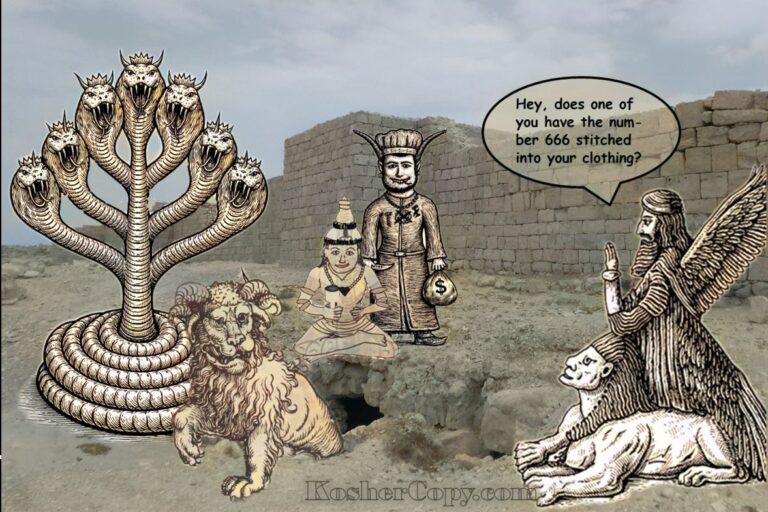
In this blog I want to look at reasons “church” might not be the best term to define these congregations of people. The word “church” might carry 21st century connotations that were not true in the primitive Congregations of Asia Minor in the first century. I have conveniently placed a graphic of this at the top of this blog.
Why do you doubt these were churches?
The Greek word for “Church” used in the New Testament most often (including all of the references in chapters 2 and 3 of Revelation) is the Greek word “ἐκκλησία.” This is a compound word constructed from the Greek “ἐκ” (out of), a primary preposition denoting origin and translated as “from, out or after” and the word “καλέω” which means to “call” (aloud) or invite. The compound word, therefore, means: “Those who are called out.”
The calling out can be to a city council meeting, to a birthday party, or to join others in a place of meeting. That is what Christians do every week: They attend church because they have been invited to the place of meeting or because they feel called to do so. I hope you understand the word ἐκκλησία is talking about people, not a building or an organization.
Why can’t we just use the word “Church”?
The word “church” conveys something other than the congregation of people today. The word ‘church’ as defined by most of our dictionaries means “An edifice consecrated to worship, specifically for Christian worship.” Linguists believe the word ‘church,’ derived from the Middle English (German) word ‘chirche’ originates from the Greek word ‘kyriakon.’ Webster’s 1936 Universal Dictionary defines this as: “the Lord’s house,” or “belonging to the Lord.” I hope you catch that I am saying the word “ἐκκλησία” is about people and the word “church” is about a place.
The church buildings that exist today include a sanctuary, lobby, classrooms, offices and other spaces (fellowship hall, gymnasium, etc.) to host a wide variety of activities. These structures require member funding for maintenance, staff services, furnishings, insurance, supplies and incidental items. Most religious activities take place within the walls of these buildings rather than in the world where Jesus asked us to share the Good News. The modern church structure was almost totally unknown in John’s lifetime.

Is the Synagogue a Jewish “Church”?
The word “συναγωγή” from the Greek “σύν,” a preposition meaning with, together association, companionship, process, resemblance, possession, instrumentality, addition, etc and the Greek “ἄγω,” a verb meaning to lead; by implication, to bring, to induce or to keep. The word Synagogue therefore means an assemblage of persons like the word “ἐκκλησία.” During the first century, at the time John wrote the book of Revelation, the seven congregations were more aligned to the worship and organizational practices of the Jewish Synagogue than they were to the pagan temples that existed across the Roman Empire.
The first Synagogues probably appeared after the destruction of the First Temple while the Hebrew people were in exile in Babylon. In order to maintain ethnic and religous identity the people met together in homes, fields or other places. Some think Ezekiel refers to the Synagogue in 8:1 and 20:1-3 where the prophet meets with the elders in his home or 11:16 where God noted He had been a “sanctuary for them in the countries where they have gone.” Achaeologists have found Synagogues across the Holy Land that date back to the second century BC.
The Jewish people call their meeting places “Beit ha-tefilla” or “house of prayer” where services are held; “Beit ha-kneset” or “house of assembly” for communal meetings and events; or “Beit ha-midrash” a “house of study” for learning Torah and Jewish texts.
What were gatherings called in the Old Testament?
Several words are used to communicate Jewish gatherings in the Hebrew Bible. The Hebrew word that most closely relates to ekklesia is”miqra.” This word comes from a combination of mō·ād’ (congregation) and qara’ (called out to meet) and is often translated ‘Holy Convocation.’ Moses used this word in Leviticus 23 and Numbers 29 to create in Israel five national festivals where people would come together to honor God.
The first use of the term “miqra” in the Bible occurs in Exodus 12:16 where extended families gather in a home for the first Passover. The “miqra” also occurred when masses of people journeyed to Jerusalem to celebrate the Harvest festivals. These meetings did not occur inside an official building (only Levites could enter the Temple), but in homes and other places where people could gather to give thanks and worship God.
How the ἐκκλησία became the Church
In the very early days Christian groups were very small. Congregations met in houses or at other appointed meeting places. As the number of Christians in an area grew, or when several congregational units came together they would rent a larger facility, such as the Hall of Tyrannus. Home meetings were very common in the early days of Christianity. They continued to be used as the faith spread to new areas. And Home meetings continue today as new congregations are formed. Many larger congregations have found small groups of people meeting in homes is beneficial because of the strong relationships formed in small groups.
As I wrote about in my last blog, these meetings were informal and staffed by volunteers. Paul himself was a volunteer, the Bible says he made tents for a living. The point is that things were very simple at the beginning, and up to the time that John wrote the Book of Revelation.

Only after the last living disciple died did things get more organized and formal. Ignatius of Antioch (who was born in Smyrna) began to formalize the Priesthood into an official organization. Ignatius wrote; “Let all follow the bishop as Jesus Christ did the Father, and the priests as you would the Apostles. Reverence deacons as you would the command of God. Apart from the bishop, let no one perform any of the functions that pertain to the Church. Let that Eucharist be led valid which is offered by the bishop or by one to whom the bishop has committed this charge. Wherever the bishop appears, there let the people be as wherever Jesus Christ is. There is the Catholic Church.” (Letter to the Smyrnaens, 8) The practices established by the second century church can be called Monarchical Episcopacy (or Monepiscopacy). This type of church government began in Antioch and western Asia Minor.
At the onset of instituting the formal organization of the church the official leader, the bishop, needed to display strength and stability, so buildings were erected for status and permanency. As Christianity grew, so did the buildings. Because official Deacons and Priests became providers of religious sacraments, congregation members became passive sheep. The structure, the building and acts of faith became scripted, as did our interpretations and opinions of what is happening with the seven churches of Asia Minor and the book of Revelation.
How do the Seven Congregations connect to the Book of Revelation?
I have written a book to explain the meaning of the Book of Revelation entitled :John’s Apocalypse: A Jewish Idea.” As you can tell by these posts, this book breaks some new ground. I wrote the book looking through the eyes of the Apostle John. Over the course of my original research I learned many new things that I share in the book. Please take a look at the book, and order one today.