
The Book of Revelation: Who? What? When? Where? Why? How?
Questions abound when the conversation turns to the last book of the Bible: Revelation.
Who wrote the book of Revelation?
What is the book of Revelation about?
When will all the events described in the Apocalypse occur?
Where will all this happen?
Why was the Book of Revelation written?
How does this involve me?
Do you really want to know the Book of Revelation?
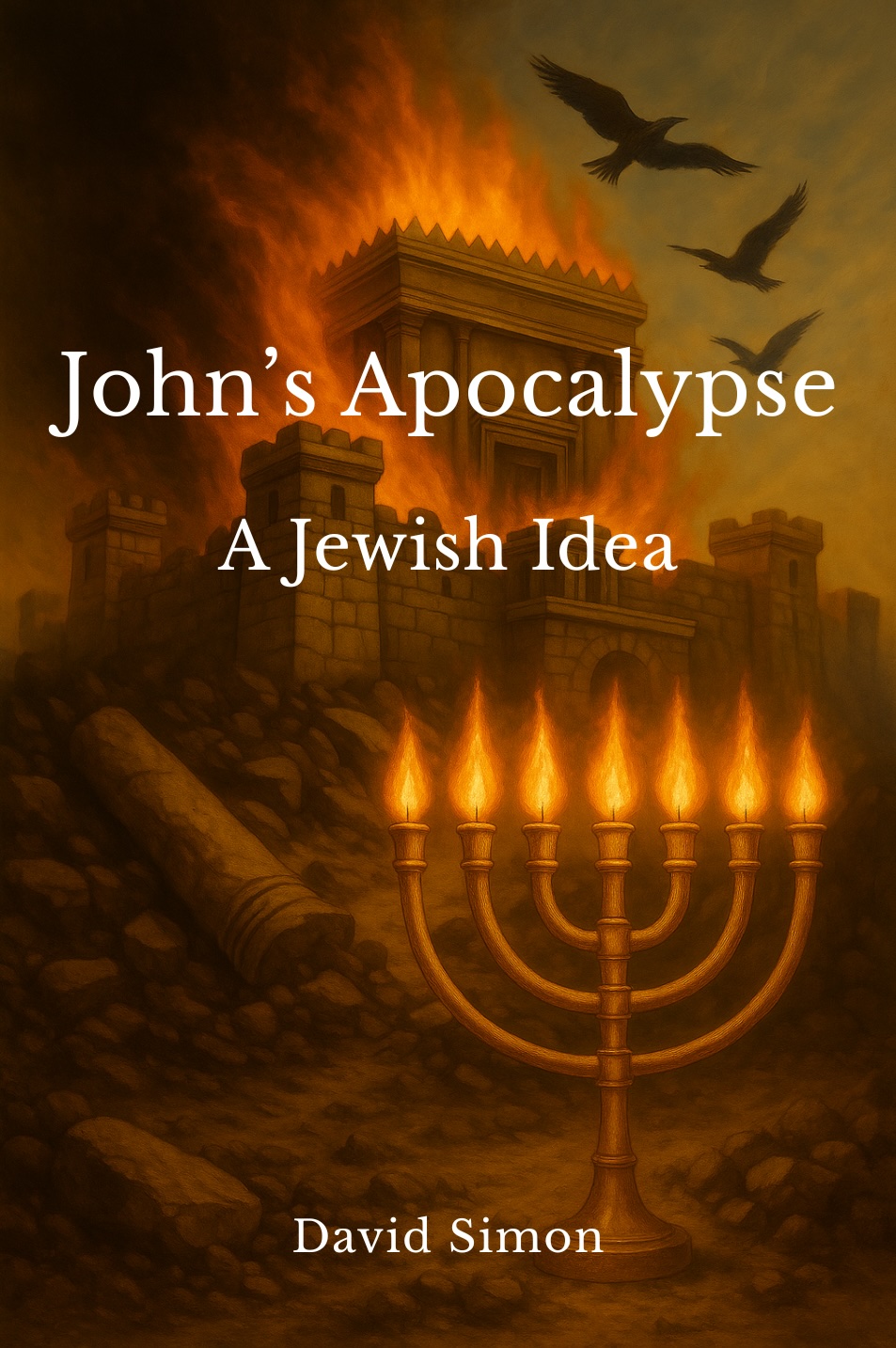
In this concise blog post, I will respond to the questions above. Yet short, focused blogs and a few pointed questions and answers cannot provide a full understanding of the Book of Revelation. If you truly desire to understand the Book of Revelation, it is best to begin by looking at what the final book of the Bible communicated to its original readers. Most books do not deal with this … but a new easy-to-read book, “John’s Apocalypse: A Jewish Idea,” will help you understand this mysterious Book of the Bible. Please, click on the book Title, go to Amazon.com, and read the first few pages of the book.

Who wrote the book of Revelation?
The Apostle John, the disciple to whom Jesus entrusted his own mother, the Book of Revelation. John saw things clearer than most disciples, and employed a style of writing to help readers understand what he was saying. While some modern writers try to say “another John” wrote the Apocalypse, early Christian writers of the next generation whose parents and grandparents knew the disciple of Jesus bear testimony that indeed the Apostle John wrote the book of Revelation between 85 and 96 AD.
Justin Martyr (c. 110 – 165 AD) in his Dialogue with Trypho said, “there was a certain man with us, whose name was John, one of the apostles of Christ, who prophesied, by a revelation”
Irenaeus (c. AD 130–202) knew “those men who saw John face to face” and said he “beheld the apocalyptic vision … towards the end of Domitian’s reign.”
Tertullian (c. AD 155–220): In The Prescription Against Heretics says “the apostles are still pre-eminent in their places, in which their own authentic writings are read” and “the Apostle John was … remitted to his island-exile,” which means Patmos, as it appears in the first chapter of the Apocalypse.
Clement of Alexandria (c. AD 150–215): wrote, “the Apostle John … on the tyrant’s death, he returned to Ephesus from the isle of Patmos”
The author of the earliest surviving commentary on the Book of Revelation is Victorinus of Pettau (died c. AD 303): wrote, John composed the Book of Revelation while “condemned to the labour of the mines” on Patmos “by Cæsar Domitian.”
Eusebius (c. AD 260–339): the church historian quotes Irenæus to say of the Apostle John, “If it were necessary for his name to be proclaimed openly at the present time, it would have been declared by him who saw the revelation. For it was seen not long ago, but almost in our own generation, at the end of the reign of Domitian.
So, why can’t people understand the book of Revelation? Perhaps because they are looking the wrong direction.
What is the book of Revelation about?
God calls Biblical Prophets to help people understand disturbing events that occur in the world around them. The Apostle John is no different, and states at the beginning of the Book of Revelation that God called him to “to show his servants what must soon take place.”
Later in the first chapter of the book he shares his simple outline for the book: “the things that you have seen, those that are and those that are to take place after this.” The book “John’s Apocalypse: A Jewish Idea” shares the details of the book in an easy to read style with many references from John’s contemporaries demonstrating actual conversations of the era in which the Book of Revelation was written.
The text above states that John wrote the Book of Revelation during the last two decades of the first century of the Common Era. Just previous to his writing, in the year 70 AD, the Romans destroyed the Temple in Jerusalem along with its altar. During the destruction, Israel’s priesthood members (descendants of Aaron) and over 1,000,000 people, many visiting Jerusalem from all over the world for the Passover, suffered annihilation. Although many Christians choose to disregard this important date (called Tisha b’Av by the Jews), John, the last living Apostle of Jesus, understood its importance.
The Book of Revelation tells the causes of Jerusalem’s destruction, the details of this horrible event, and then provides a vision for the destruction of evil and the future of God’s people. “John’s Apocalypse: A Jewish Idea” details these ideas so people living in our day and age can understand. Perhaps Gentiles who desired to hide the savage slaughter of the Jewish nation and the total destruction of God’s Temple looked first at the verses praising God, and then began to give future applications to the Book of Revelation so they would not have to face Roman responsibility for the wholesale destruction.

When will all the events described in the Apocalypse occur?
As mentioned above, most of the details discussed in the Book of Revelation are past tense. John shares a vision from the Temple before the destruction (chapter 1), a view from seven congregations of Asia Minor that existed in his day (2-3), a vision of God in Heaven introducing Jesus as the Lamb of God (4-5); and an explanation of why people who claim to be followers of God suffer horrible things (6).
John then moves on to a historical section of the book. He tells Nebuchadnezzar was able to destroy the Temple in 586 BC (7-9); and then briefly reminds readers how Antiochus desecrated the Temple in 167 BC (10).
John tells about the coming of Jesus (11), God’s protection of people who truly live for God (12), and speaks of leaders of Judea in the period leading up to the destruction of the Temple (13, 17). John then paints a picture of the events that took place during the Temple’s destruction (14-16).
After a lament for Jerusalem (18), John show how God will destroy evil in the future (19-20) and restore Jerusalem to its position of significance. (21-22)
Revelation 1-18, very much like the rest of the Bible shows how God acts in history. Eternal truths for today appear throughout this portion of the Apocalypse. Chapters 19-22 of Revelation present a word of hope. All of this is tied together and explained through a rhetorical and literary device known as a chiasmus.
Many teachers today either want the book of Revelation to include them or desire to draw crowds through sensationalism. These speakers have turned the book of Revelation around to foretell (soothsay) the future rather than seeking a historical meaning. Perhaps this is the reason the Apocalypse is so confusing: because “scholars’ turn the book around so it seems to speak to us today and add words to the book to defend their idea.
Where will all this happen?
Most of the Book of Revelation took place around Jerusalem. The seven congregations John mentions were in what is now the western portion of Turkey. John’s vision of the world not only explains why and how the destruction of Jerusalem takes place, but Jesus’ disciple includes teachings of how believers are to behave in times of persecution. This is an important teaching the author wished every person of faith would understand, and beyond Christianity itself the high moral teachings of this book should be shared with the whole world.
Why was the Book of Revelation written?
John wrote the book of Revelation for several purposes:
1, He wrote the book first and foremost so Jews and believers in Jesus could understand the timely purpose for Jesus’ Messianic advent. Jesus came into the world to provide an alternative to the sacrifices that were in the past offered on the altar of the Temple. Jesus is “the Lamb of God, who takes away the sin of the world!” (Jn 1:29), “the Lion of the tribe of Judah, the Root of David,” and the “Lamb, looking as if it had been slain, standing at the center of the throne.” (Rev. 5:5-6)
2, He wrote the book of Revelation to explain how and why The Lord our God, the Allpowerful King of the Universe could allow Nebuchadnezzar, Antiochus IV Epiphanes, Vespasian and Titus to violate and destroy the Temple in Jerusalem. At the heart of this are promises God made to Israel in the last portion of Deuteronomy 28. “John’s Apocalypse: A Jewish Idea” explains all this in detail.
3. The often ignored words that the Apostle incorporated into the final book of the Bible encourage believers to a) live pure lives, and b) to stand firm in times of trial. Faithful followers of the Lord God should honor the Omnipotent Omniscient God by boldly living lives that will honor God and bring heaven on earth. The last blessing of the Book of Revelation captures this thought perfectly: “Blessed are those who wash their robes, that they may have the right to the tree of life and may go through the gates into the city. Outside are the dogs, those who practice magic arts, the sexually immoral, the murderers, the idolaters and everyone who loves and practices falsehood.” (Rev. 22:14-15)
How does this involve me?
My encouragement to you is to stop looking for fantastic future predictions imposed externally that provoke fear and confusion. The Bible was not written to encourage following God through motivations of love and obedience rather than through fear of punishment.
Look for and be strengthened by the words of salvation and hope that John includes in the Apocalypse. The earliest Christians focused on the psalms included in the text of Revelation.
Begin to understand the Book of Revelation in its historic context. There are some in our world who have turned the book into a manual to promote hate, antisemitism (Rev. 2:9; 3:9 and others) and political domination.
John never intended his book to be about toppling pagan governments (like Rome). He spoke of trusting God for protection and allowing God to fight the battles against evil. (Rev. 19:11-21)
