

Smyrna (Izmir) in the First Century
John begins the book of Revelation with letters to seven Christian assemblies located in western Asia Minor (today’s Turkey). I read blogs that ask, “Were these real churches or symbolic?” From my research and a visit to the area in 2025, I can answer, “These were real churches in real cities.” In my research, I read commentaries, I looked up the meaning of the name of each city, and I read archaeological reports on the cities. The history is fascinating, so I wrote specifically about each of the seven Christian assemblies in a book entitled “John’s Apocalypse: A Jewish Idea.” I have posted some of that information on this blog.
Who was John, and did he ever visit Izmir?
John, an exile from Judea, immigrated to Asia Minor in the first century of the common era to escape persecution. John was one disciple of Jesus, and during a wave of persecution that came in the absence of a Roman Procurator and at the hands of High Priest Ananus, John fled from his native land to live in Ephesus. From this location, the Apostle of Jesus visits area churches, including the seven Christian meetings listed in Revelation 1-3.

Why Did John write Revelation?
Many people cannot understand the book of Revelation because they try to read future predictions into the book. Books of the Bible do not focus on the future; rather, they look at real life. Revelation looks at John’s real life and a very difficult situation that occurred in the first century. John, like the prophets of the Old Testament, explains the crisis event to help contemporary readers deal with the tragic situation that happened in his lifetime. As with other prophetic books, John wrote in a way that provides future readers with valuable spiritual truth.
This blog is part of a series. The first article (here) gives an introduction to the Seven Churches of Revelation. The second article (here) explains the leadership of churches in the first century. A third blog (here) examines the character of the seven churches: Ephesus, Smyrna, Pergamum, Thyatira, Sardis, Philadelphia, and Laodicea. To fully understand the book of Revelation from a first century perspective, you should purchase the book (actual book; electronic book, or audio book, or buy it at your local book store) and read it in its entirety. A sample is below:
The City of Smyrna in the First Century
Smyrna was once a small inland village that was destroyed in the Ionian War. When Alexander the Great led his army through the area, he camped at the foot of Mount Pagus and dreamed that the people should resettle the village around the Meles Springs. They named new city Smyrna after the aromatic resin myrrh, which is used for embalming, medicine and perfume.
As the Macedonian army advanced to the east, they discovered new products that were sent back home on the Great Silk Road. Smyrna responded by building a port where the Hermus River empties into what is now called the Gulf of Izmir. The large harbor on the bay provided ideal safety for the ships that docked in the city at the foot of Mt. Pagus.

Why was Smyrna important?
Smyrna became quite prosperous and grew along a main road that led from the seaport, through a vaulted marketplace, and into the governmental complex. Residential areas grew in the lower areas around the harbor and spring and then up Mount Pagus, where those of high status and wealth could get an expanded view of the beautiful bay. People built Temples inside a wall around the top of the mountain for the gods. From the seaport this looked like a crown. Aelius Aristides, a famous orator, admired the city’s gymnasiums, agoras, theaters, sacred places and beautiful views of the water. His speeches helped Smyrna come back to life after a devastating earthquake in 17 BC.
Over time the city’s population became stratified and the wealthy displayed their privileged position. The town’s elite punished foreigners who were different and the poor who would not bow down to the local idols. Non-conformists were not welcomed in the city which relied on local talent. History records the martyrdom of Polycarp, a disciple of the Apostle John, who remained faithful even to his death.
The Church at Smyrna
Believers in Smyrna were from the lower strata of society because the city’s social elite believed their power came from the gods of the city’s beautiful acropolis. There was great pressure in Smyrna to adopt the historic traditions the community was built around and worship the gods on Mount Pagus.
John mentions the “Synagogue” (assembly) “of Satan,” people “who say who say that they are Judeans and are not.” There were some Judeans (exiles from Jerusalem and Judea) who challenged members of the congregation in Smyrna by saying, “What is the use of following the God we did back home, the Temple in Jerusalem is gone … our faith is dead! Let’s just be like the people here in Smyrna that worship idols in our meetings.” Members of the church then and now face continual challenges to become like those the world around us.
Members of each of the young congregations in Asia Minor faced a variety of challenges in every direction. There were Nicolaitans and followers of Balaam, Sibyl, or Jezebel tried to change the beliefs of the young church from inside. The community at large spread gossip and slandered the newly faithful because they rejected the idols of their former faith. Persecution of church members included filing formal court charges, or public lynchings. Polycarp, a disciple of the Apostle John and others were martyred for rejecting Hellenistic, Roman and Imperial gods. Jesus said, “I know your tribulation… Do not fear.” These saints at Smyrna were faithful to the point of death and received the crown of life.

A Jewish Idea
John’s descriptions of Smyrna create reminders of the Jewish Day of Atonement, which occurs ten days after Rosh Hashanah. This is the day the inscribing of names is complete and the books of life are closed. The Talmud says, “All are judged on New Year and their doom is sealed on the Day or Atonement.”
On the Day of Atonement, the High Priest of Israel goes through the ceremonies described in Leviticus 16, offering a bull for himself, sacrificing a ram for Israel and sending the scapegoat into the wilderness. Yom Kippur is the only day of the year that one man, the High Priest of Israel, can enter the Holy of Holies. After cleansing himself, he is to take a goat as a sin offering for the people, sacrifice it and sprinkle its blood behind the curtain on the mercy seat of the Ark of the Covenant. Moses wrote, “In this way he will make atonement for the Most Holy Place because of the uncleanness and rebellion of the Israelites, whatever their sins have been.”
Priests could no longer enter the Temple or the Holies because the Temple lay in ruins and the legitimate line of High Priests was dead. Followers of “The Way;” (Ac 9:2; 19:9; 22:4) a Jewish sect that taught Jesus, “the Lamb of God” gave his life on the cross to replace the sacrifices that once took place on the destroyed altar of the Temple in Jerusalem were often criticized. Hecklers began calling them “little christs” (Ac 11:26) which is how the developing sect began to be called Christians.
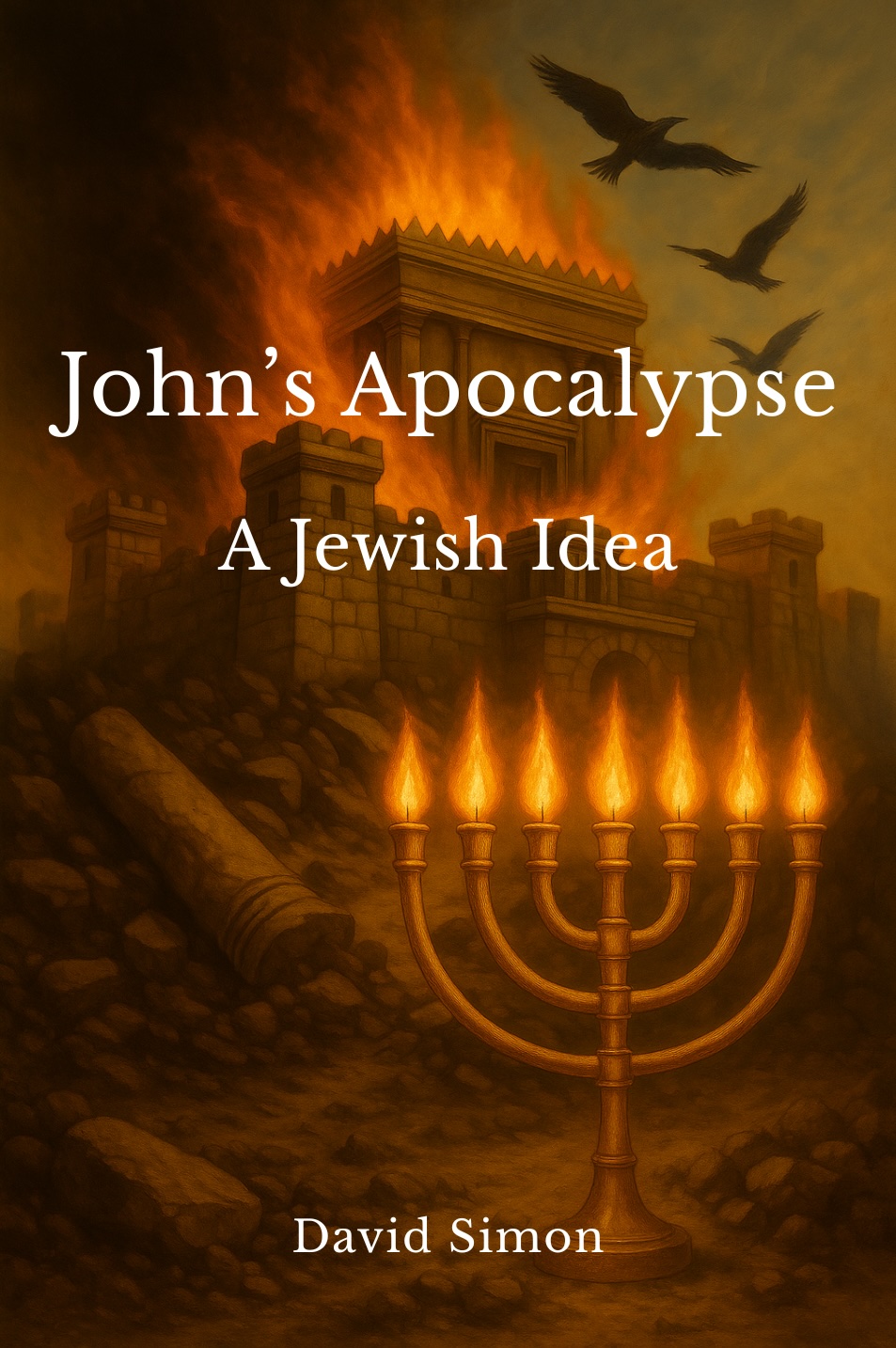
To read more about the Seven Churches and to learn more about what John was saying to early believers in Jesus, purchase the book “John’s Apocalypse: A Jewish Idea.” (actual book; electronic book, or audio book, or have your library order a copy so you and others can read it!) so you can see the the Apocalypse as others understood the book at its initial release.